
Most coloring books are a stack of unrelated pictures. A coloring storybook follows one character from the first page to the last, so you color your way through a little story. It’s a satisfying project for adults who love to color, and it makes a thoughtful handmade gift for a child, a niece or a friend who has everything.
It’s also easier to make than it sounds. You need an original character, a handful of simple scenes and a way to turn those scenes into clean line art.
Contents
Why a story makes coloring more fun
Coloring is popular with adults for a reason. In a 2005 study published in the journal Art Therapy, Nancy Curry and Tim Kasser asked 84 college students to color for 20 minutes. Students who colored a structured design, such as a mandala or a plaid pattern, showed a drop in anxiety, while free drawing on a blank page showed no such effect. Later studies have found similar results, though most of them were small and used student volunteers.
A storybook adds something a random collection lacks: a reason to turn the page. You get attached to the character, and each new page feels like the next chapter.
Step 1: Design an original character
Start with a character that’s yours. Copying a famous cartoon is fine for a page or two at home, but an original character can go anywhere, appear in as many books as you like and never get you into copyright trouble if you decide to share or sell your pages.
Good coloring characters share a few traits:
- Simple, bold shapes. A round body, big eyes and a clear outline read well in black and white.
- A signature outfit or prop. A raincoat, a scarf, a backpack or a watering can makes the character recognizable on every page.
- Not too much fine detail. Tiny patterns turn into areas too small to color.
Think about how the character will look without color. A hedgehog in a yellow raincoat is still recognizable as line art because of its spiky outline and the big round buttons on the coat.
If you don’t draw, you can describe your character in plain words and let Neolemon’s cartoon generator create it. Pick a style, such as 2D flat illustration or a children’s book look, and ask for a full-body front view on a plain white background. That first image becomes your character’s reference for the whole book.
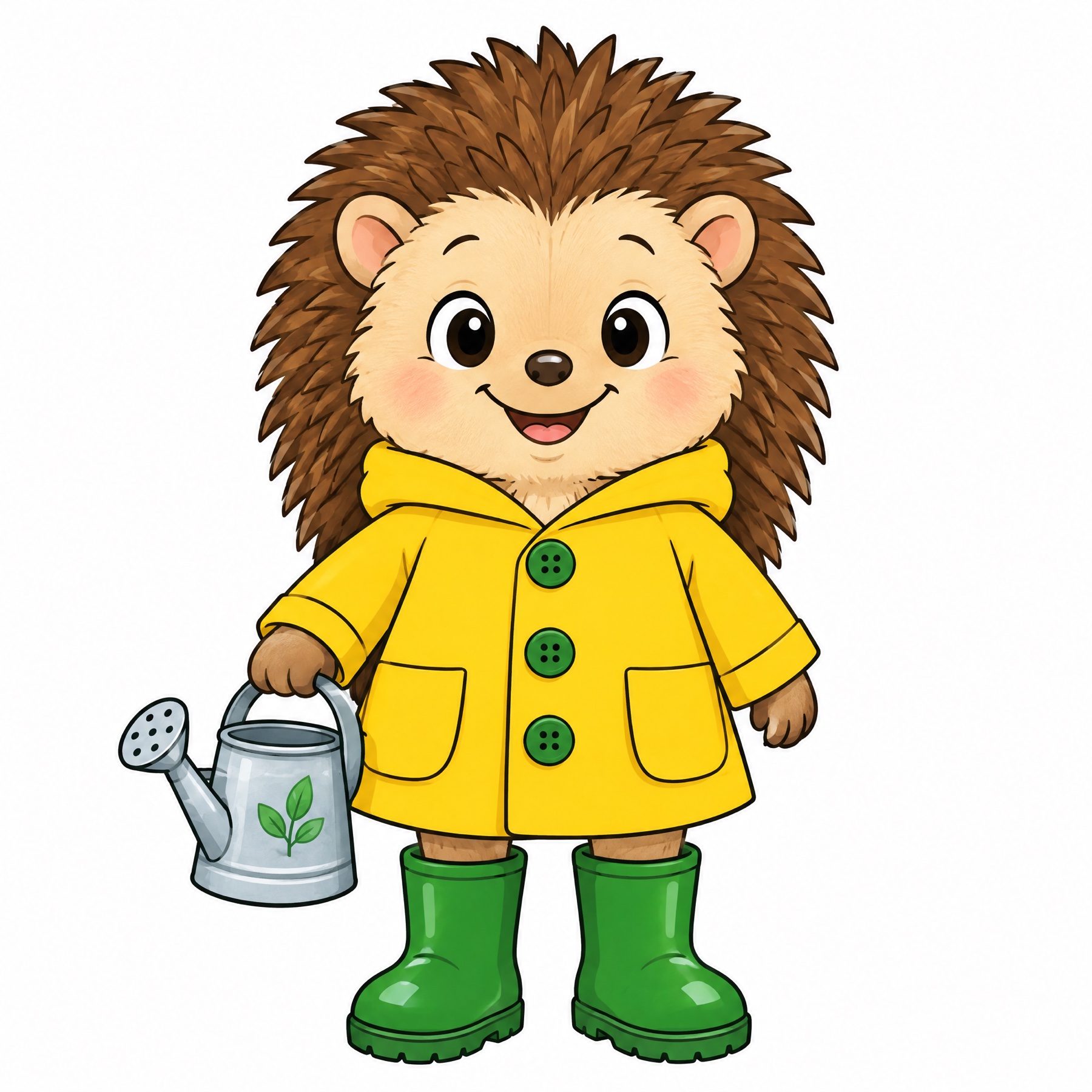
A cartoon hedgehog named Juniper in a yellow raincoat with big green buttons and green rain boots, holding a small tin watering can, on a white background
Step 2: Sketch a tiny story
You don’t need much plot. Six to twelve scenes are plenty for a coloring storybook. A few shapes work especially well:
- A journey: The character sets out for somewhere and passes interesting places along the way.
- A season: The character plants a garden in spring and harvests it in autumn.
- A problem to solve: Something goes missing and the character searches for it.
Write one short line of text for each page. “Juniper planted one tiny seed and waited.” Then note what the picture shows. Keep backgrounds simple enough to color but interesting enough to explore, like a fence, a few flowers, some puddles or a snail.
Step 3: Create the scenes with the same character
Now put your character into each scene. The important part is consistency. If Juniper’s coat has three buttons on page one, it should have three buttons on page nine. General-purpose image generators tend to change details from one picture to the next, so use a tool that keeps the character locked while the pose and setting change.
In Neolemon you work from your reference image and change one thing at a time: the pose, the expression, the outfit or the background. Juniper can water the seedlings on one page, shelter under a giant leaf on the next and sit by a pumpkin on the last, and she’ll look like the same hedgehog throughout.
Step 4: Turn your scenes into line art
Here is where the illustrations become coloring pages. Neolemon has a separate Coloring Book tool that converts a full-color image into clean black and white line art. Upload a scene, choose an aspect ratio, and it produces an outline version with the shapes, the character and the background details intact. The pages come out at print resolution, sized for standard letter and A4 paper.
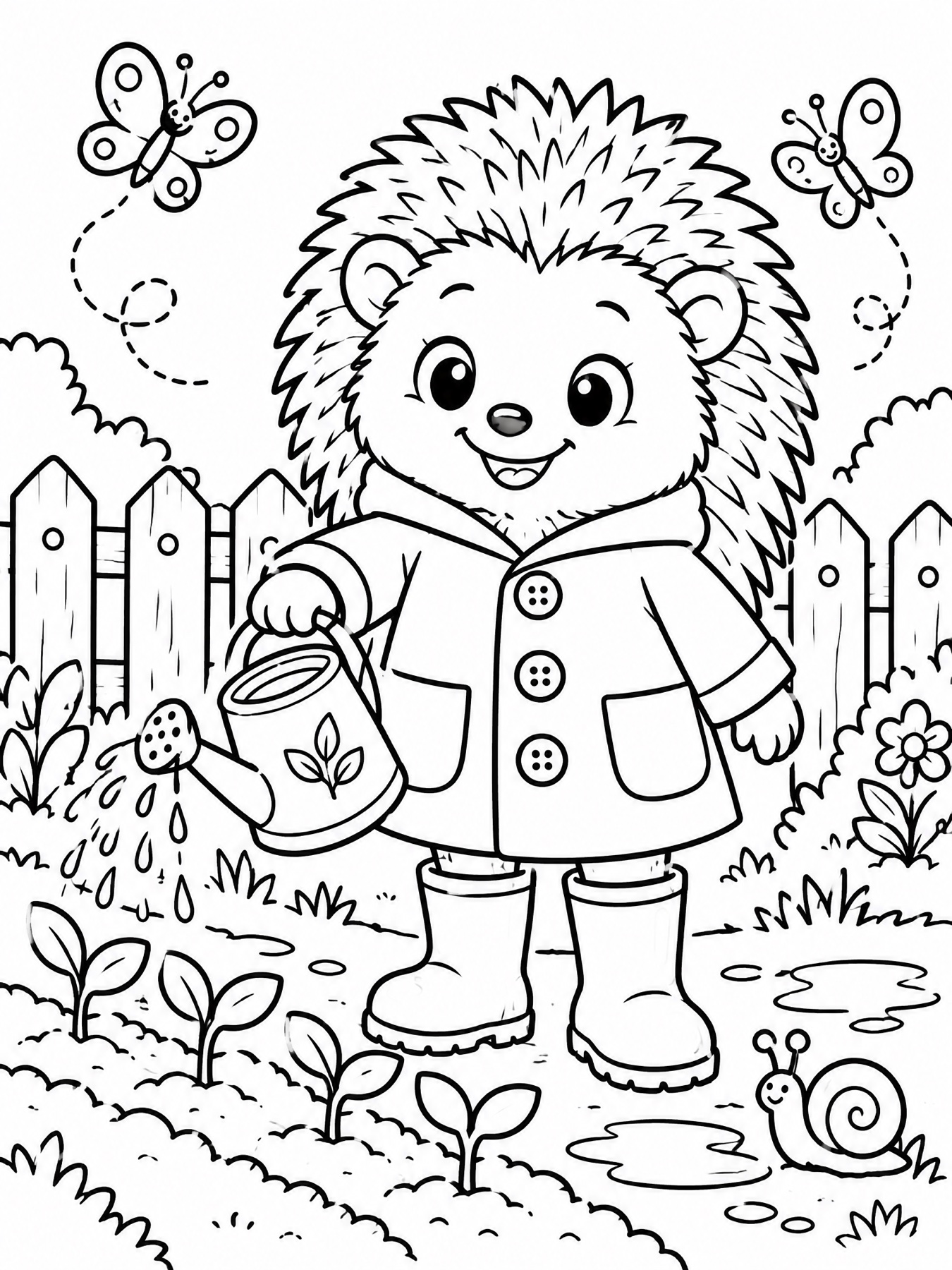
A black and white coloring page of Juniper the hedgehog watering seedlings in a vegetable garden, with a fence, butterflies, a snail and puddles to color
The same tool works on photographs, which opens up some fun bonus pages. You can create a coloring book page from a photo of your own garden, your pet or your house and slip it into the book as a place your character visits.
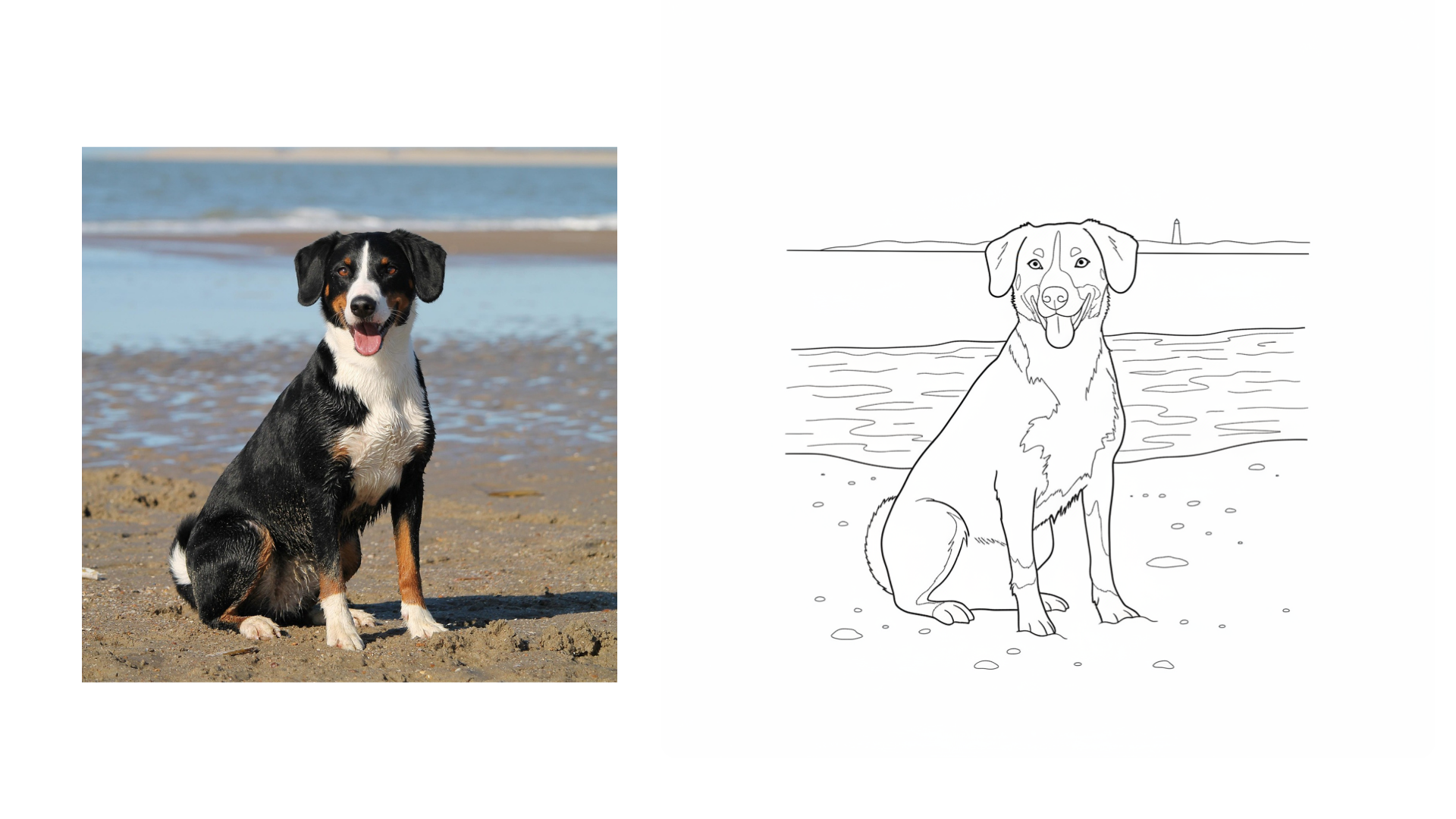
A photo of a dog sitting on a beach next to the same scene converted into a clean black and white coloring page
Step 5: Check every page before you print
Look at each page as if you were about to color it:
- Are the outlines thick enough to stay inside with a marker?
- Are the shapes closed, with no small gaps where color would leak?
- Is there anything too tiny to color comfortably?
- Is there room at the top or bottom for the line of story text?
If a page is too busy, simplify the background and convert it again. Remember who will be coloring it. Young children need big open shapes, while adult colorists often enjoy more detail.
Step 6: Print and bind your storybook
For a home edition, print on heavier paper so markers don’t bleed through. Print on one side of each sheet if you plan to use alcohol markers. Add a cover page with the title and a full-color version of your character so the colorist can see the “official” colors, or leave the cover blank for them to decide.
A local copy shop can add spiral binding for a few dollars, which lets the book lie flat while you color. If you want to share your book more widely, you can also publish it through a print-on-demand service such as Amazon KDP.
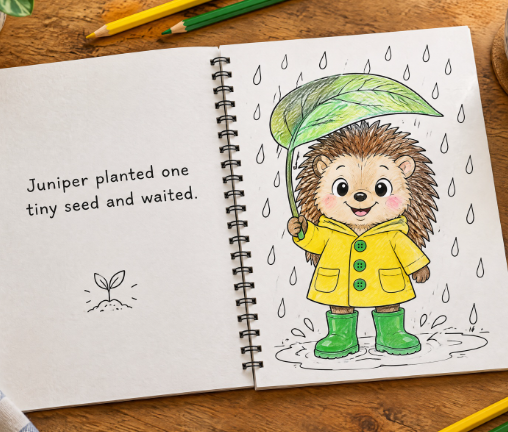
A spiral-bound homemade coloring storybook open on a wooden table, with a line of story text on the left and a half-colored page of the hedgehog under a leaf on the right, colored pencils scattered around
Color the first copy yourself
Make a copy for yourself before you give any away, and color it slowly, page by page. It’s the best test of whether your lines and shapes work, and it’s a lovely way to spend a few quiet evenings with a character you invented.

