
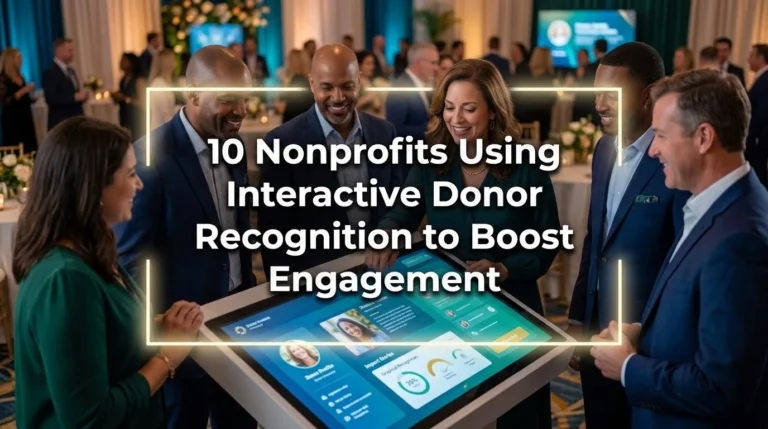
Most institutions begin their recognition efforts with a simple bronze plaque. It looks professional until year three when you run out of wall space and the engraving costs start eating into the actual funds raised. Upgrading your strategy means shifting from carpentry to content management. Hardware like commercial touchscreens and video walls is now highly accessible. The real work is organizing your database to highlight people properly and keeping the system updated. The shift is happening across the entire sector. Ten distinct types of nonprofit organizations are already managing this transition operationally.
Contents
1. Regional Healthcare Foundations
Hospitals deal with constant foot traffic and ongoing capital campaigns. Moving away from static displays allows a development team to update named tiers and tribute zones instantly. A hospital lobby is often a place of high emotion and long wait times. Families visiting a memorial wing can use a screen to read the exact story of the person who funded the ward. This setup gives administrators a way to honor legacy contributors while still making room for new annual donors without commissioning fresh metalwork every quarter. In a clinical setting, physical maintenance matters too. Facilities teams prefer flat glass surfaces that can be wiped down quickly with hospital grade sanitizers rather than dusting hundreds of individual brass nameplates.
2. Private High Schools
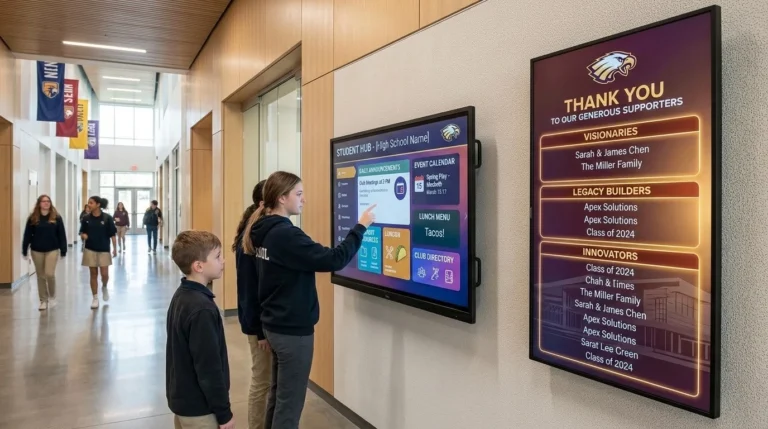
These campuses have rich histories that should not be forgotten and bright futures that should not be overlooked. Administrators are constantly looking to recruit exceptional students and retain top teaching talent. Using interactive donor recognition software, these schools consolidate physical space in crowded hallways while professionalizing their image for prospective students. They pull decades of championship teams, valedictorians, and major financial contributors into a single searchable database. Schools also use these systems to promote local business sponsors effectively. Instead of hanging static banners on a fence, a local business can sponsor a rotating digital profile during big campus events.
3. University Athletic Departments
College athletics rely heavily on recurring booster support. Keeping up with hundreds of annual contributors using physical metal plates is completely inefficient. Display screens allow a facility to rotate through massive lists before and after big games. Athletic directors use this to show current funding goals for new training equipment or stadium upgrades. By putting the current campaign progress right next to the names of previous major contributors, the department creates clear social proof for potential new boosters walking through the VIP areas. It makes the funding goals highly visible to the people most likely to write a check.
4. Fine Arts Museums
Museums understand visual presentation and visitor flow better than anyone. They use high resolution screens to blend appreciation with their current exhibits. When a major benefactor funds a new wing, the organization can display high quality video interviews explaining why they gave. They don’t just cut a name in stone. This approach treats the act of philanthropy as an exhibit in itself. It gives everyday visitors a deeper look into the financial backing that keeps cultural institutions open to the public.
5. Community Food Banks
Organizations focused on immediate community needs often hesitate to spend money on big lobby installations. They worry it looks like they are wasting operational funds. However, utilizing a digital donor wall on a modest screen in the volunteer staging area solves this problem directly. It shows regular volunteers exactly who is funding the delivery trucks and warehouse space they use every day. This internal placement builds morale among staff and board members without appearing extravagant to the general public. It keeps the focus entirely on community impact.
6. Public Library Systems
Libraries manage multiple branches across a city and have vastly different funding levels at each location. By networking screens across different buildings, a library foundation can ensure a major contributor to the downtown hub is also recognized at smaller neighborhood locations. Staff can manage all of this from a central office. When the annual reading drive kicks off, they push the same recognition update to twenty different screens simultaneously. Libraries also deal with strict municipal budgets. Moving to a centralized screen system saves the city money on continuous engraving contracts. A single staff member at the main branch can upload new supporter names to every local branch in under five minutes.
7. Performing Arts Centers
Theaters update their playbills and backing tiers every single season. Ripping down old signage every few months is a massive waste of resources. Modern software lets theater managers update season sponsors across all lobby screens the moment a check clears. During intermission, these screens rotate through upcoming shows and the local businesses sponsoring them. It takes the burden off the marketing team to print new foam core boards for every opening night. Patrons standing in line for the bar can watch short clips of rehearsal footage alongside the names of the families who funded the production.
8. Wildlife Conservation Groups
These groups operate in visitor centers where the main draw is the physical environment itself. By integrating touchscreens, they connect specific financial gifts directly to animal welfare outcomes. A visitor can tap a name and see the exact habitat recovery project that person funded. Showing the tangible result of a check makes the concept of giving much more concrete for casual visitors passing through the center. If someone donates to a coastal cleanup, the display can show before and after photos of that exact beach.
9. Alumni Associations
Keeping track of decades of graduating classes is a heavy administrative lift. Touchstone Digital Solutions builds databases that deliver fast access to these historical records. They transform static halls of fame into memorable experiences, giving their proud partners what they call ROI beyond measure. Rather than storing old yearbooks in a damp basement, associations upload class photos, awards, and historical milestones into a cloud based system. This gives returning graduates a reason to stop and engage during reunion weekends. The easier it is for alumni to find their own history, the more likely they are to engage with current fundraising efforts.
10. Dedicated Research Institutes
Medical and scientific research facilities need to show constant progress. Their displays often track live campaign goals alongside names. Showing a progress bar for a new lab equipment fund directly next to those who already gave creates urgency. It shows exactly where the money is going and how close the team is to starting their next phase of research. Philanthropists in the medical sector want to know their money is actively accelerating cures. A dynamic screen communicates momentum much better than a static wall ever could.
The hardware gets cheaper every year. You don’t need to overthink the physical screens. The success of these projects comes down to how easily your staff can manage the database and keep the stories updated. If the software is clunky, the screens will sit untouched. Prioritize systems that your team can actually use.


