
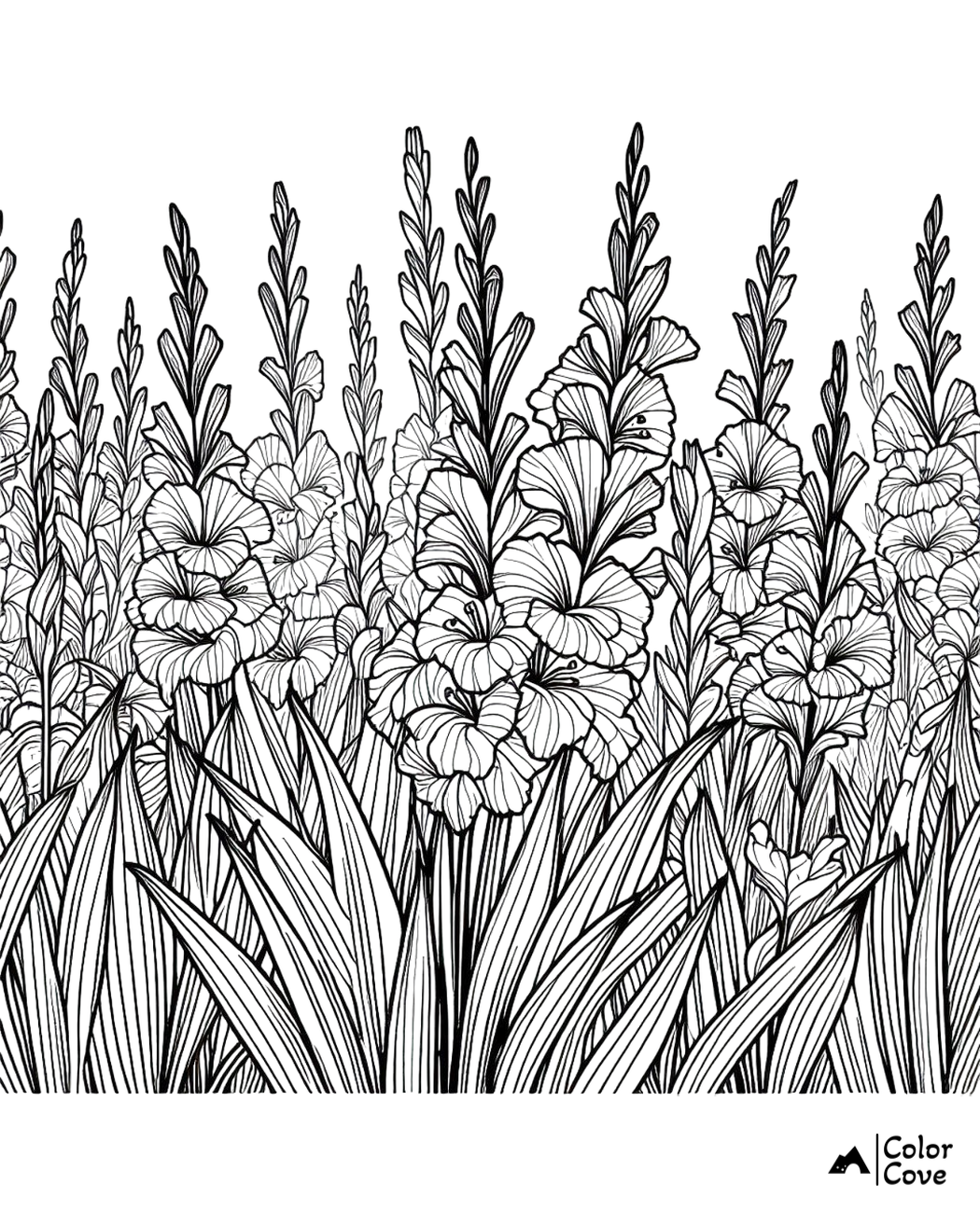
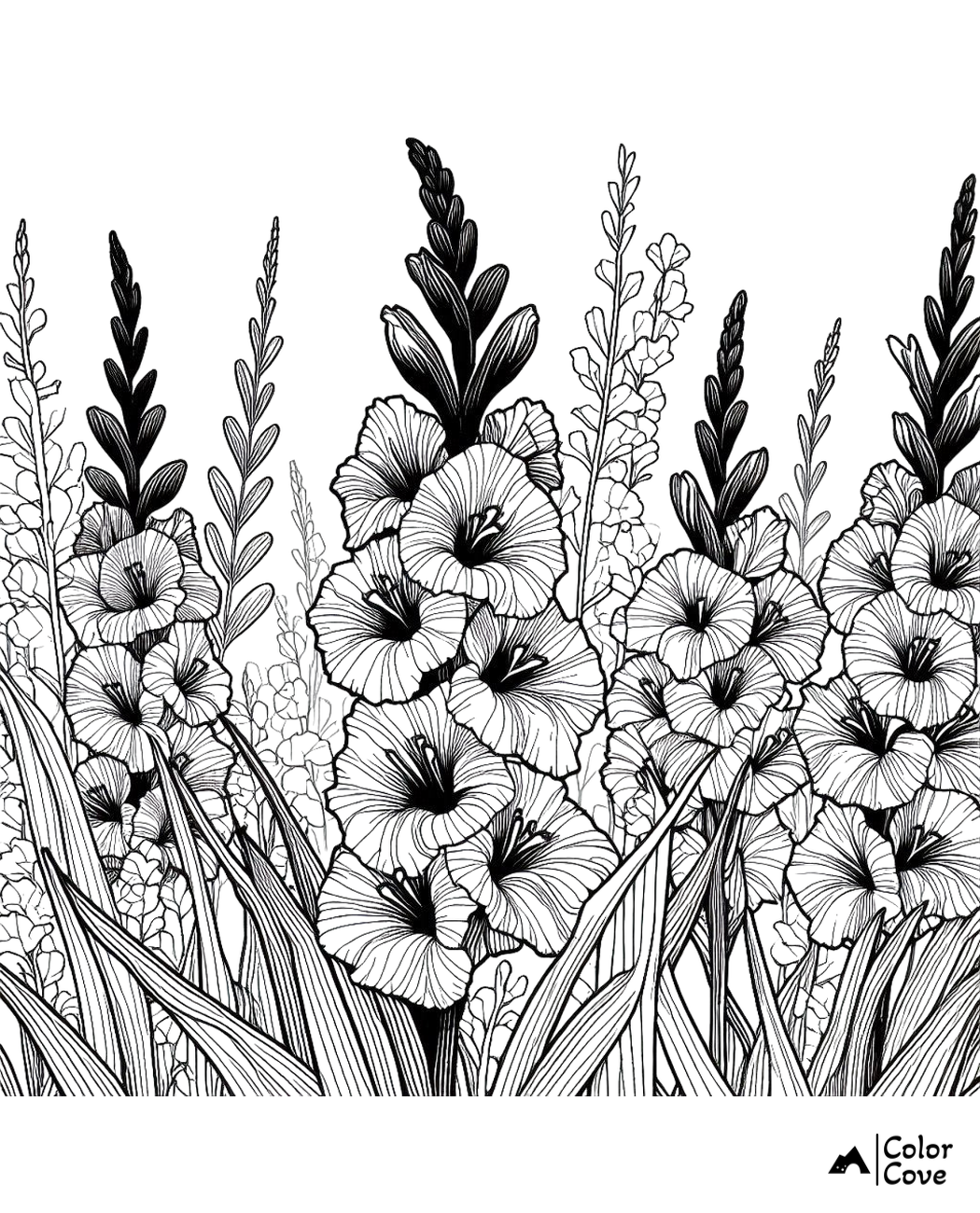
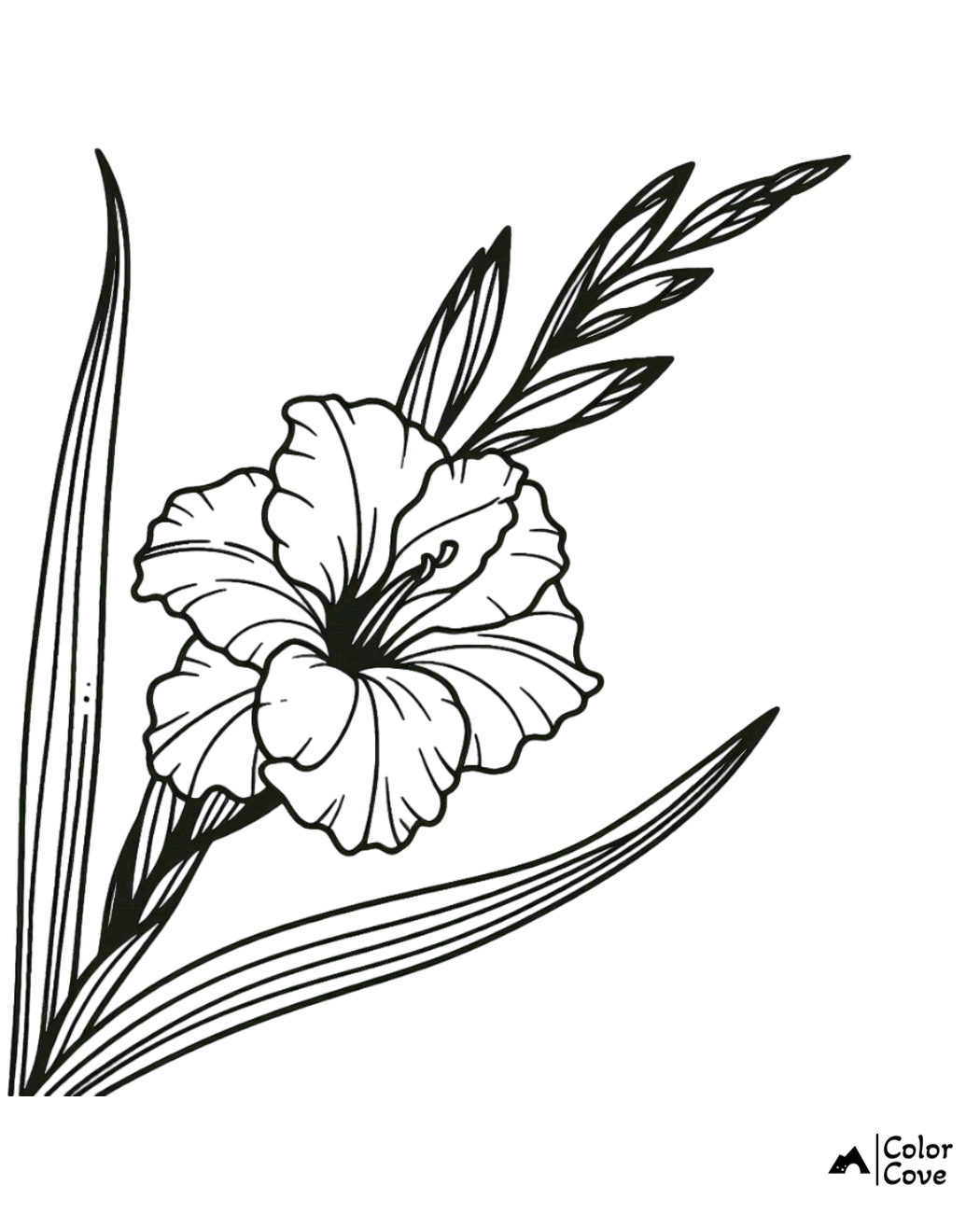
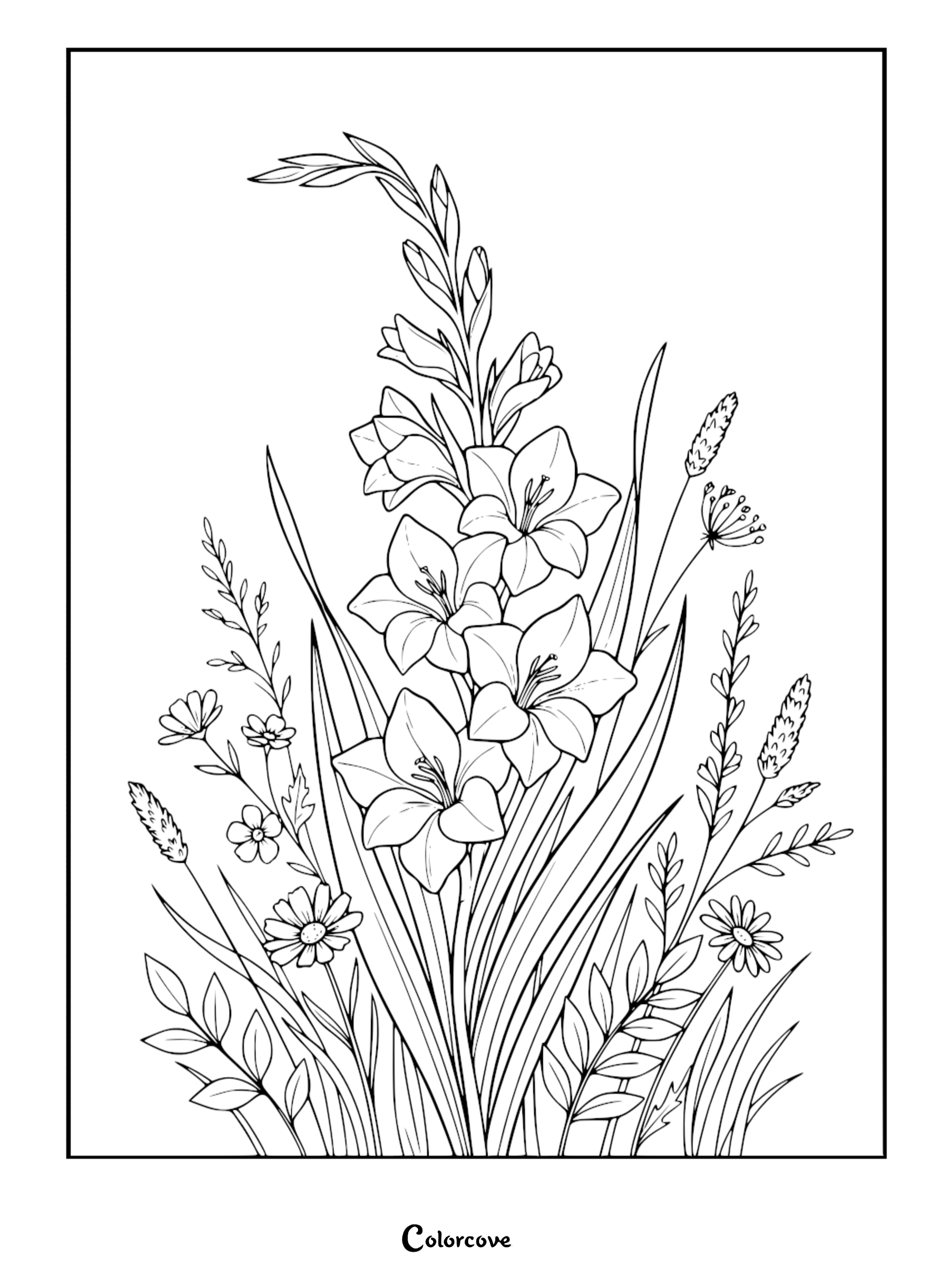
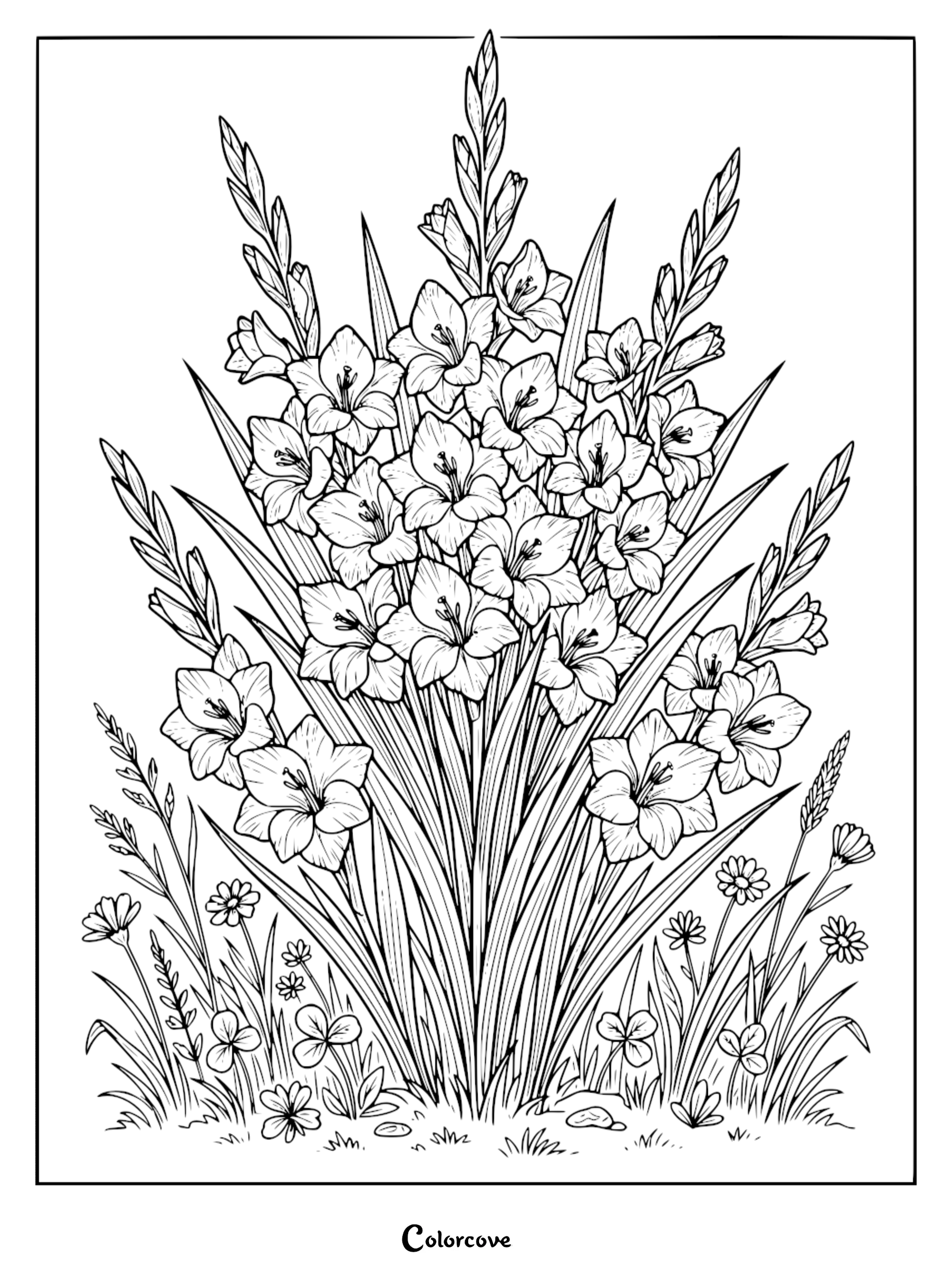
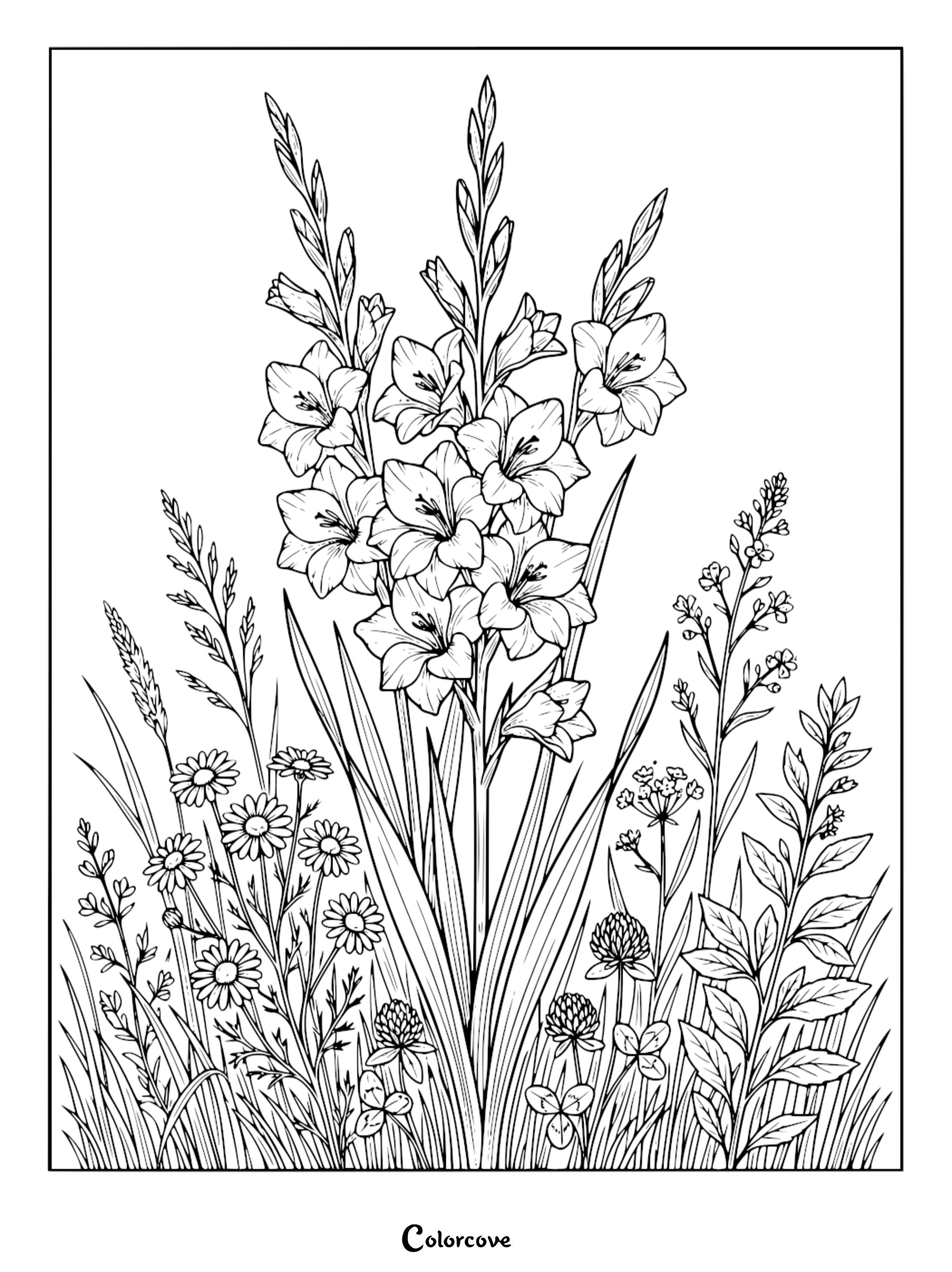
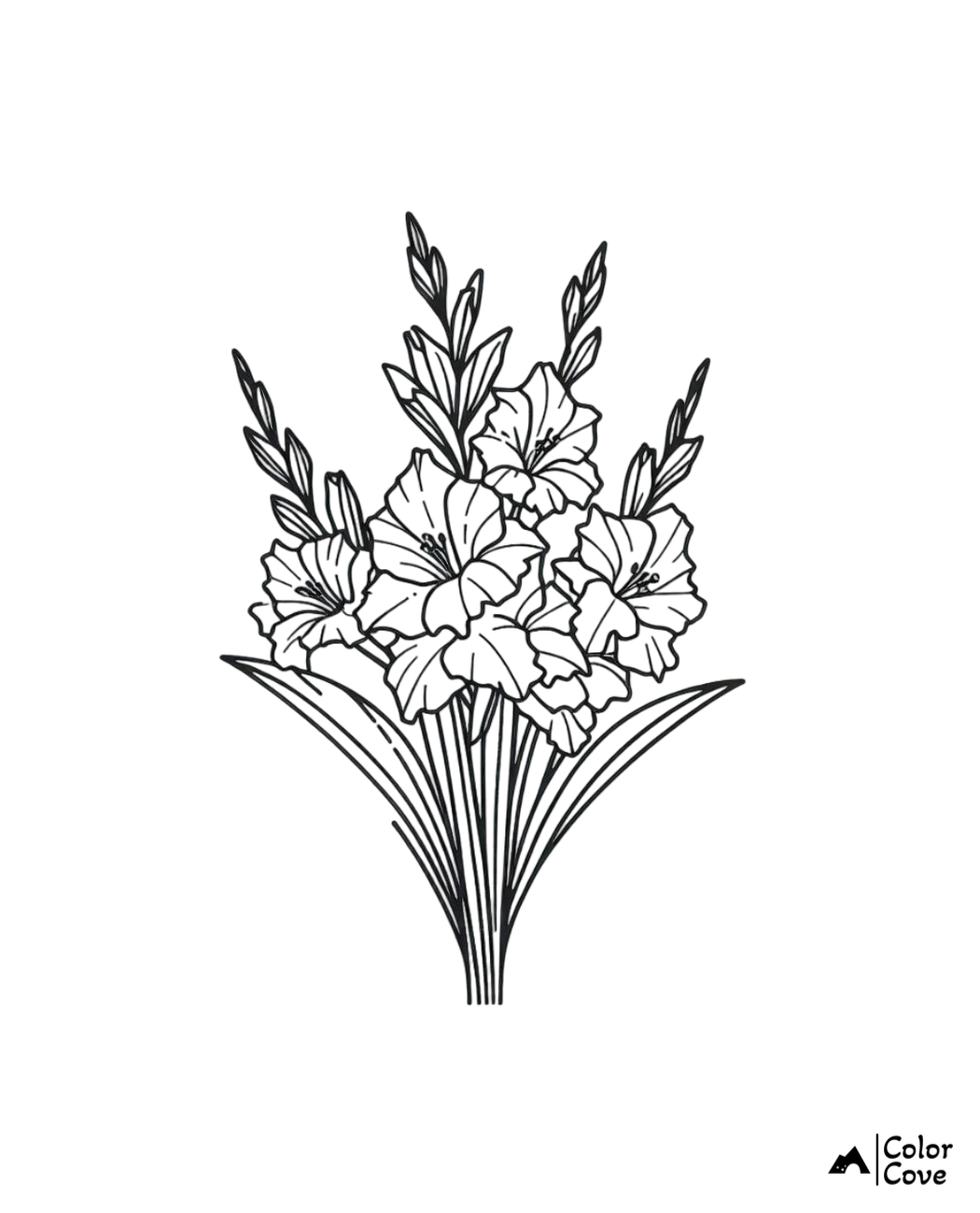
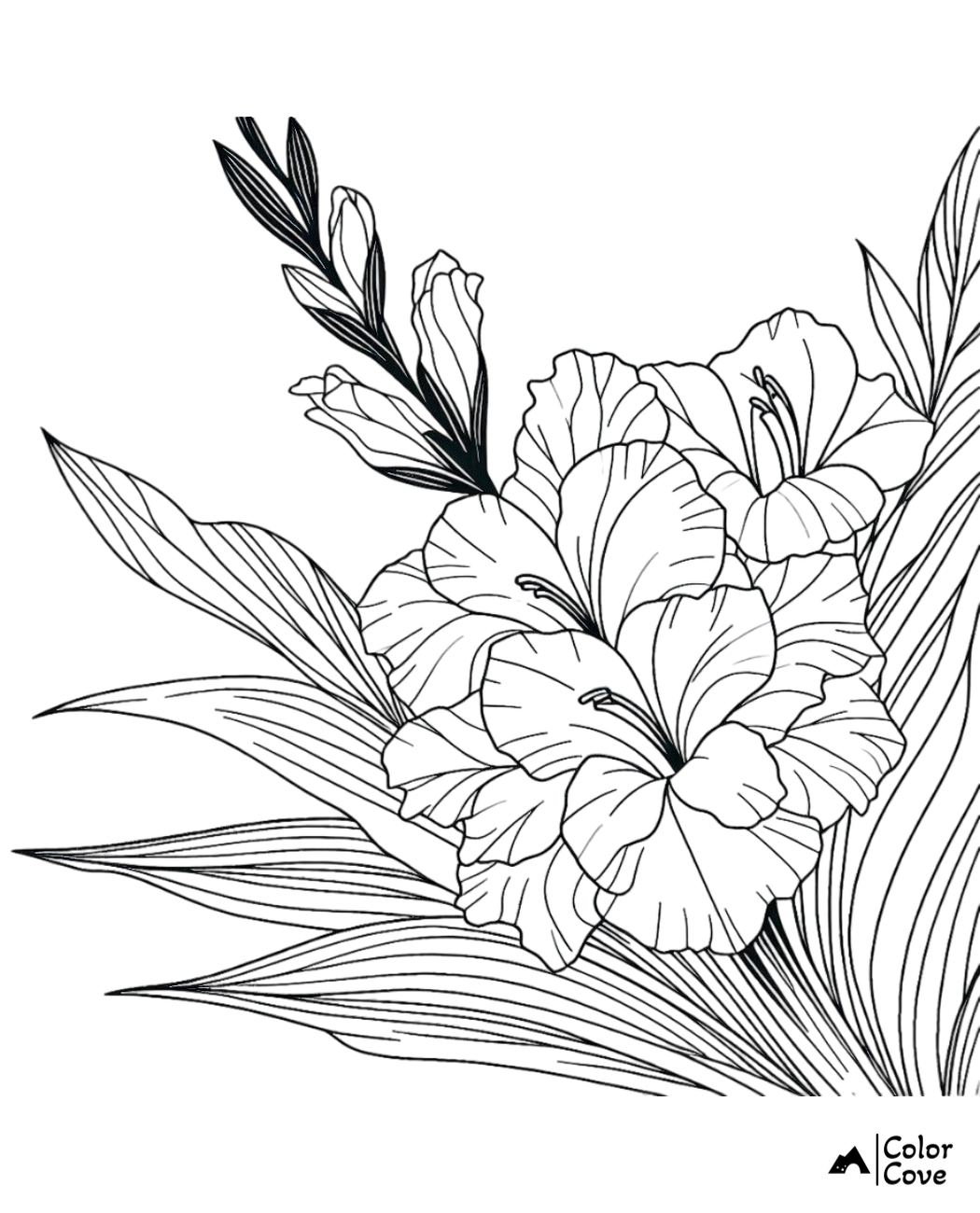
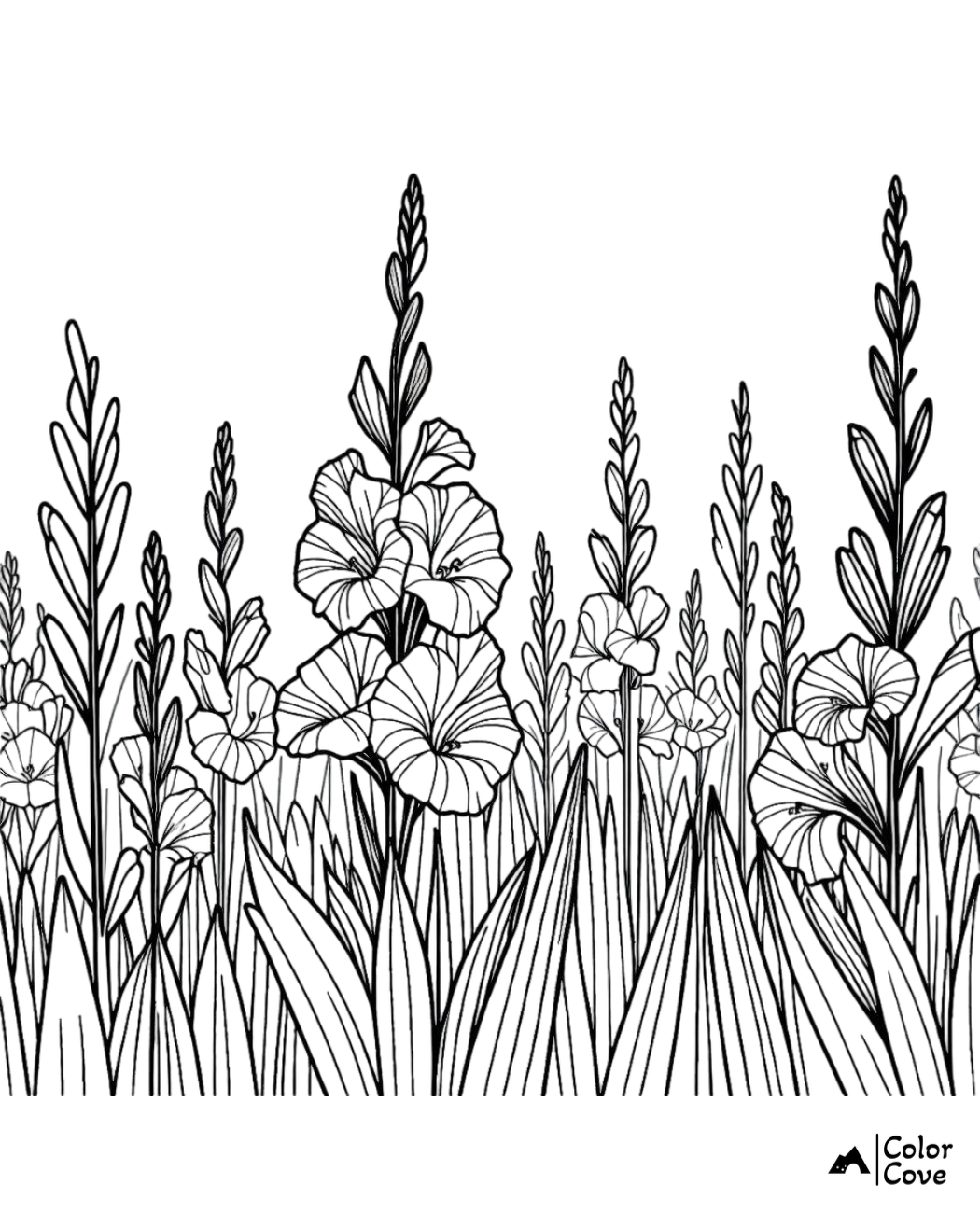
Color every facet of the “sword lily” with these 29 free Gladiolus coloring pages — a botanical printable collection spanning three distinct settings: eight nature-scene pages where gladiolus spikes rise from wild meadows of daisies and clover, attract monarch butterflies and hovering hummingbirds, tower in garden borders beneath cloudy afternoon skies, and bloom dramatically under a crescent moon and stars; ten bouquet and vase pages capturing the gladiolus as a cut flower at its most elegant — paper-wrapped gift bouquets, ribbon-tied arrangements, and lush glass-vase displays with loose petals fallen on the table; and eleven clean botanical illustrations from close-up single blooms to multi-stalk groupings with sword-shaped leaves in full anatomical detail.
The gladiolus blooms in every color of the spectrum — from pure white through shell pink, magenta, deep purple, scarlet, and sunset orange. Grab your favorite coloring tools and let your creativity bring these pages to life!
💡 Tip: Click any image to print, save, download, or color online for free!
Gladiolus in Nature — Butterflies, Gardens & Night Skies
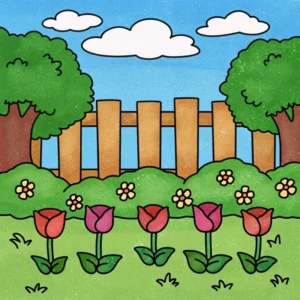
Eight pages capturing gladiolus in the wild and garden — a monarch butterfly resting on a petal, a patterned butterfly perched among a cluster of blooms, a hummingbird hovering at a tall spike, gladiolus rising from a meadow of daisies and clover, a cloudy garden border scene, and a striking nighttime page with a crescent moon and stars overhead. Warm meadow palettes and deep midnight skies make these the most atmospheric pages in the collection.

Gladiolus Bouquets & Vase Arrangements
Ten pages celebrating the gladiolus as a gifted cut flower — glass vases with loose petals scattered on the table, a striped ceramic vase arrangement, a bouquet wrapped in decorative paper with a bow, and three ribbon-tied arrangements at different stages of fullness. Warm cream for the wrapping paper, cool glass-clear tones for the vases, and deep jewel pinks or crimsons for the blooms create an instantly luxurious result.
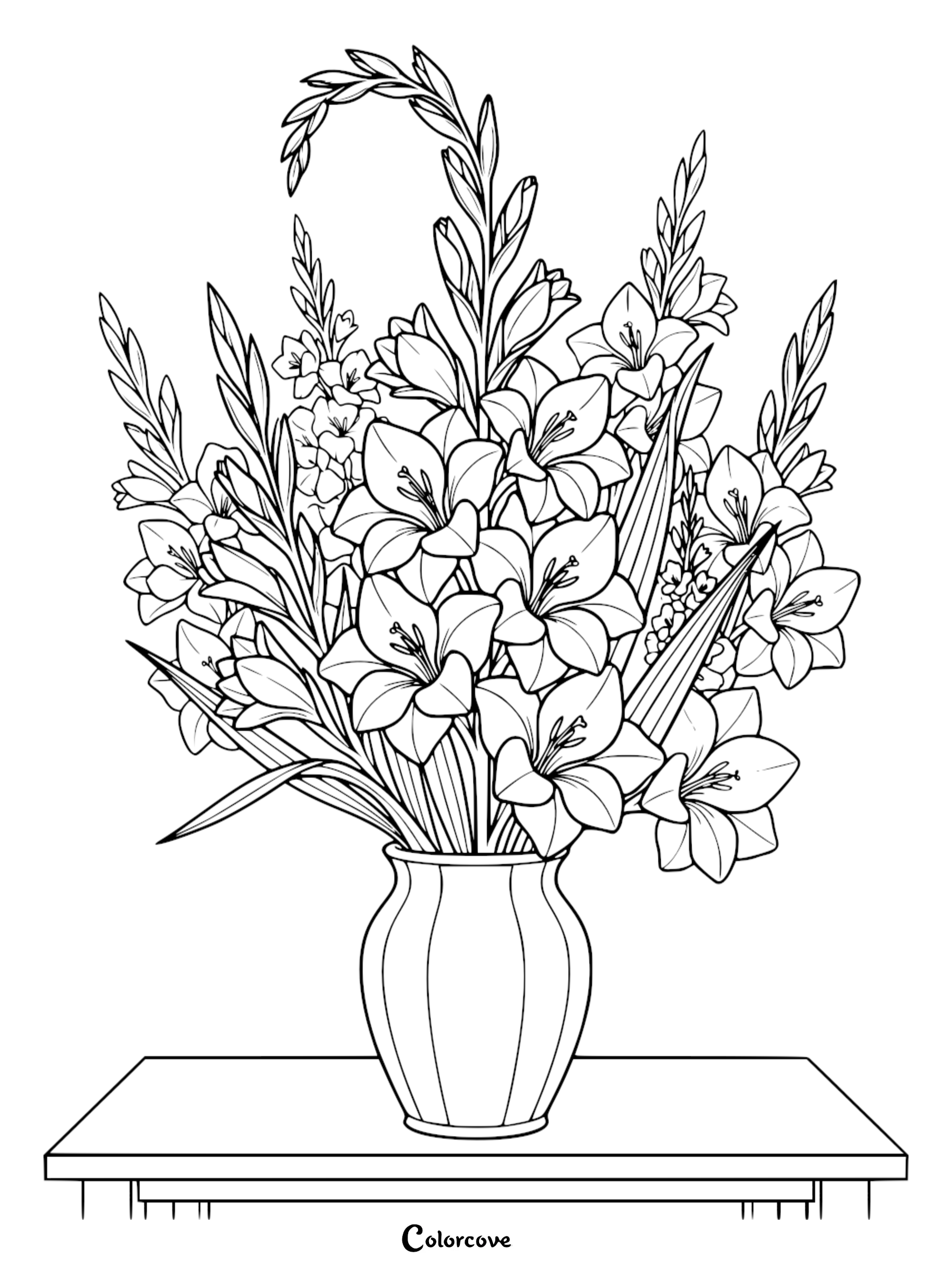
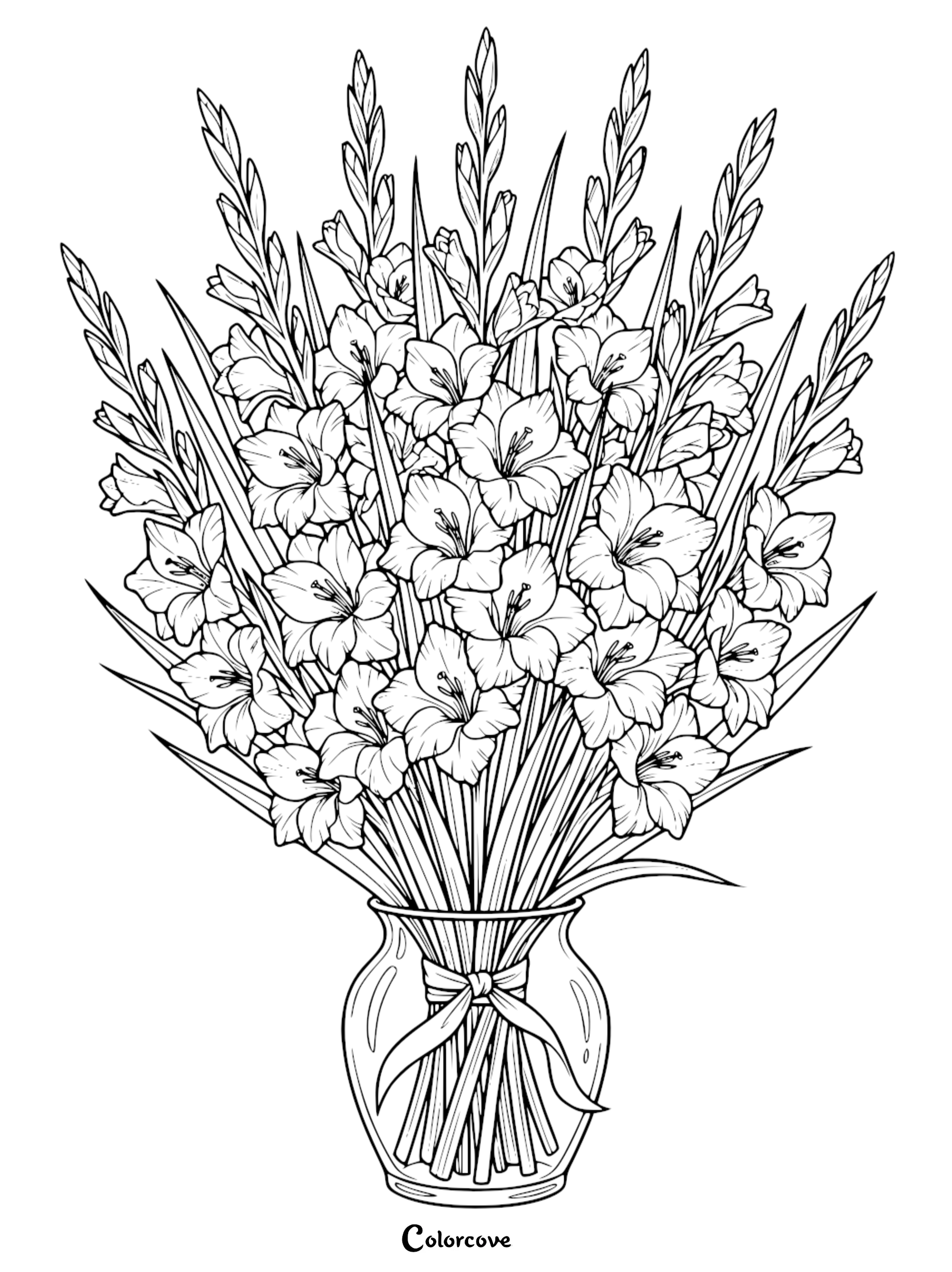
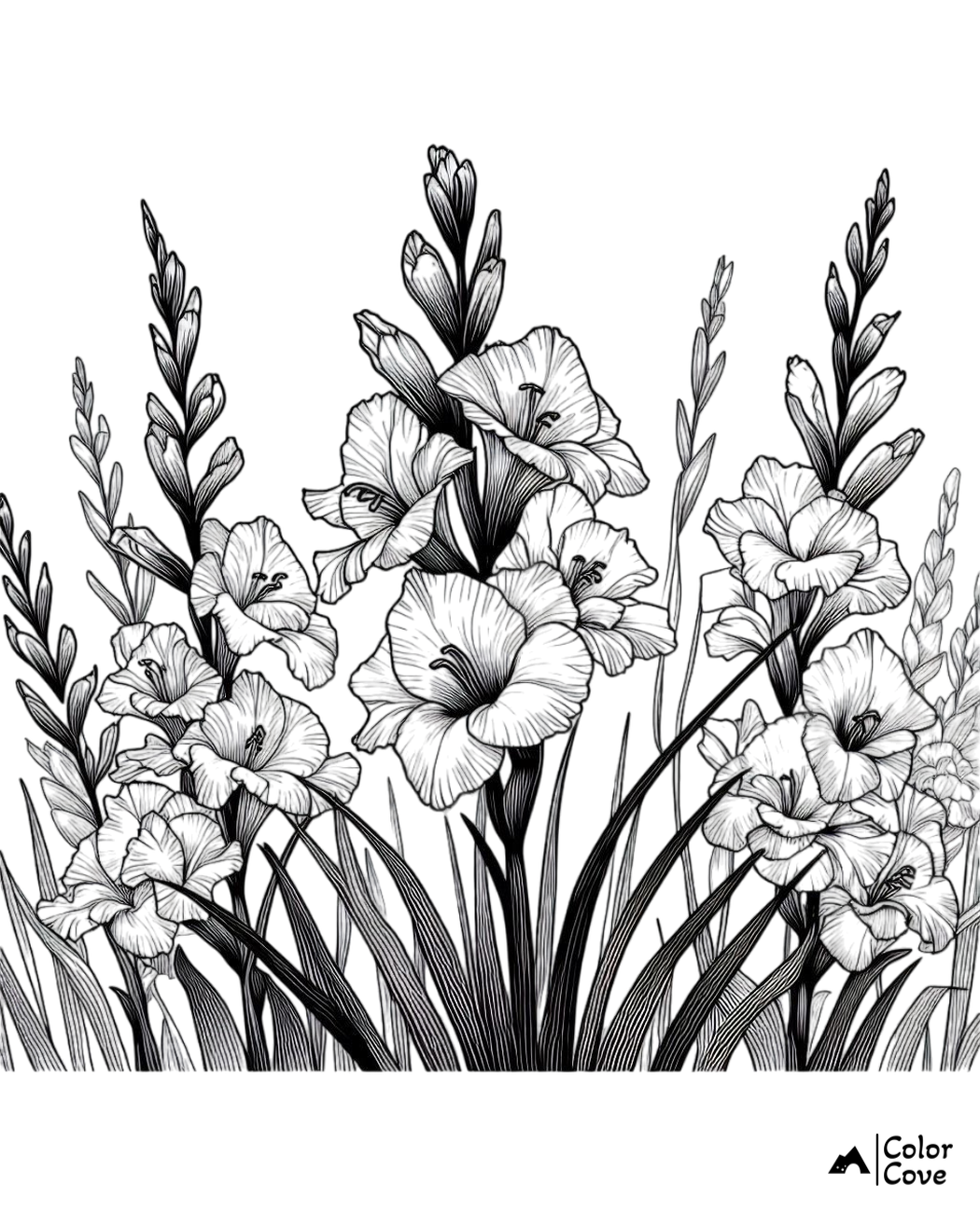
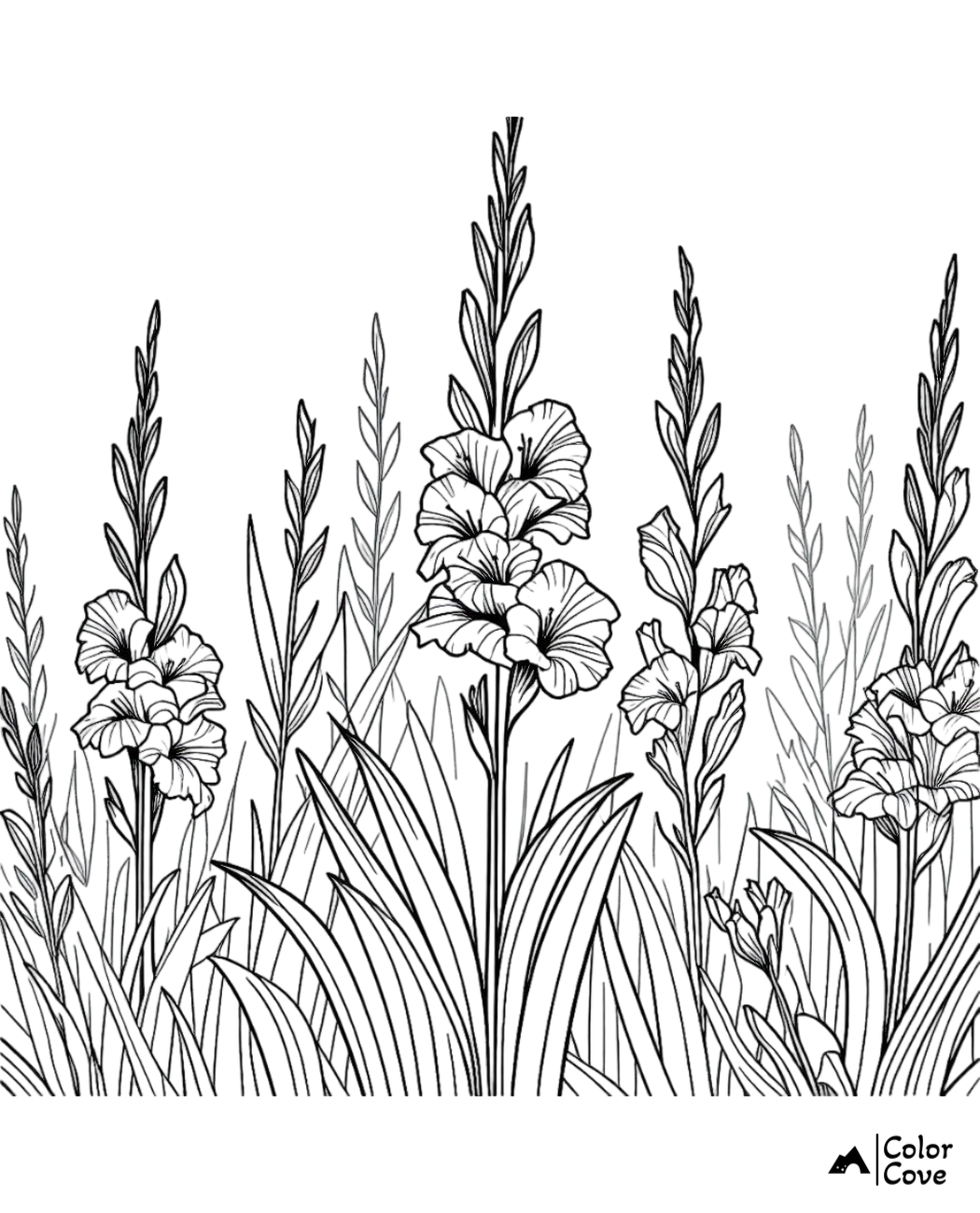
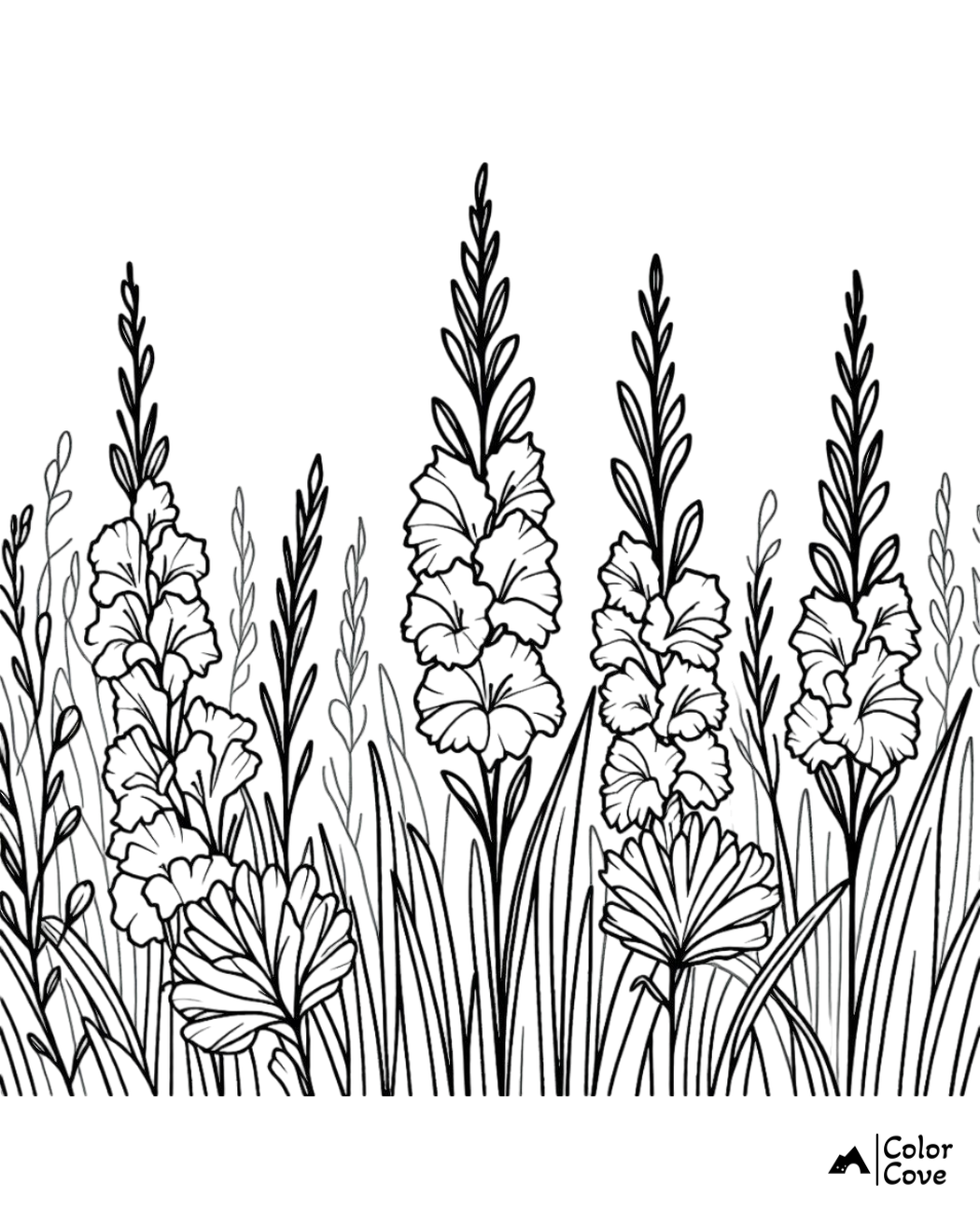
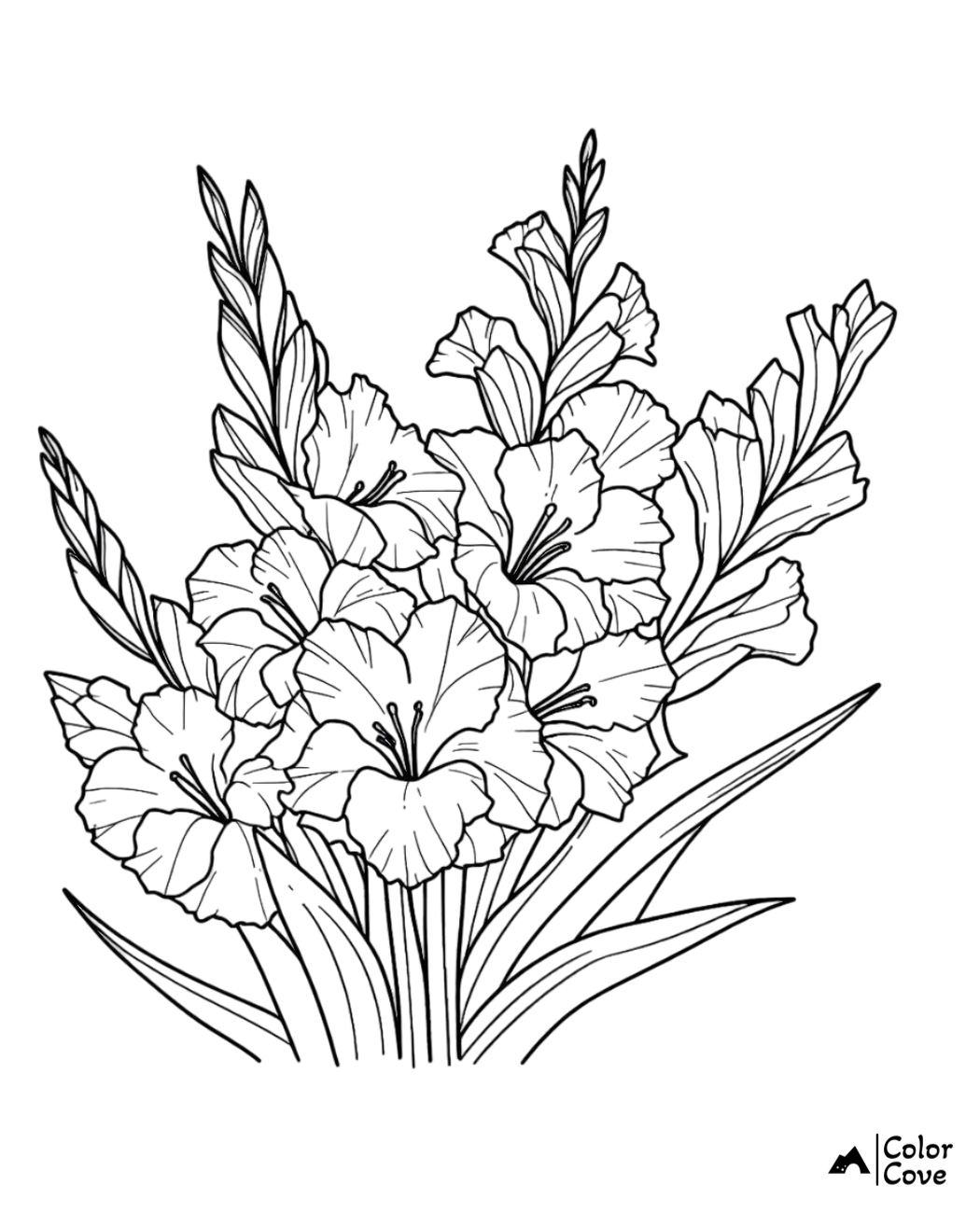
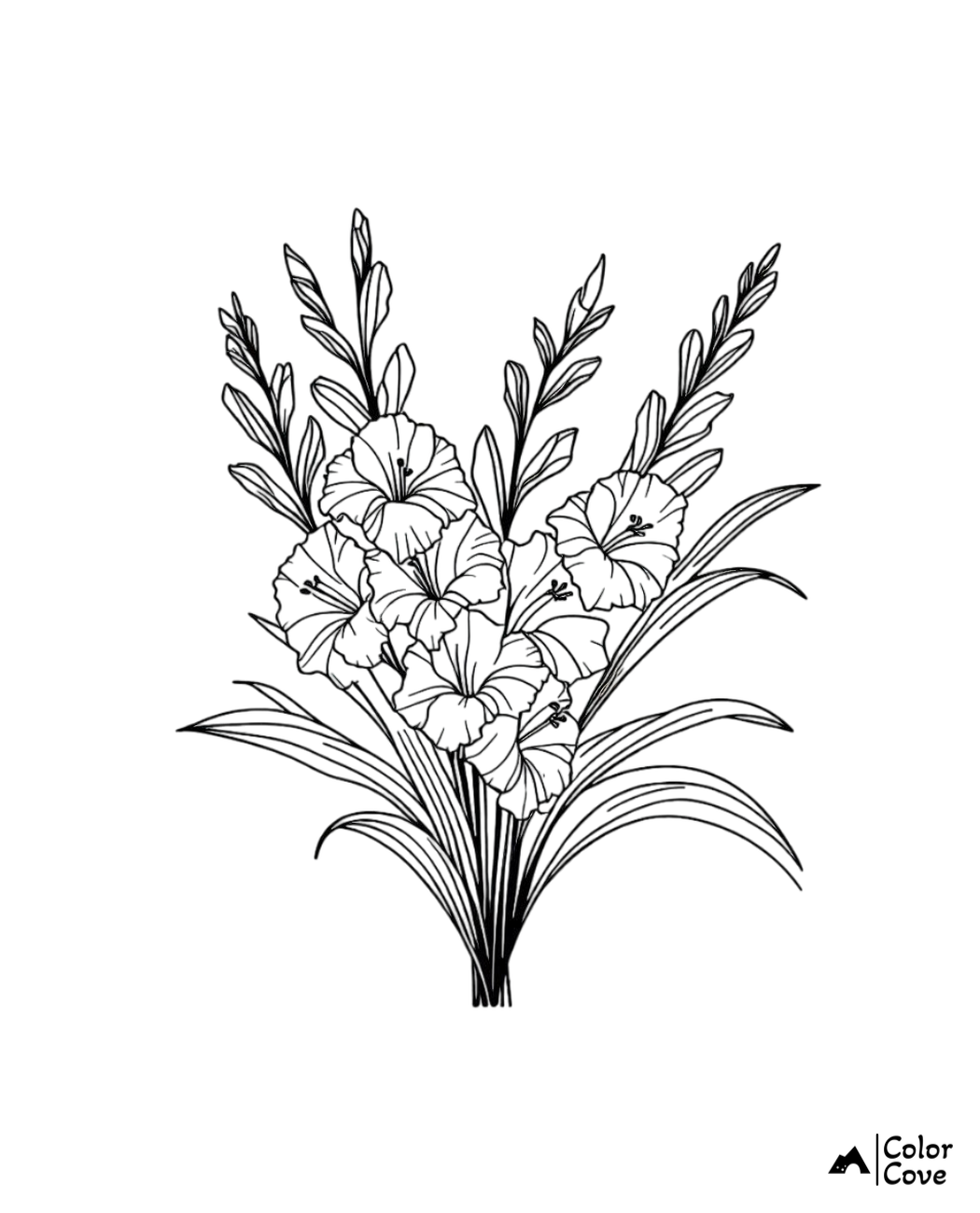
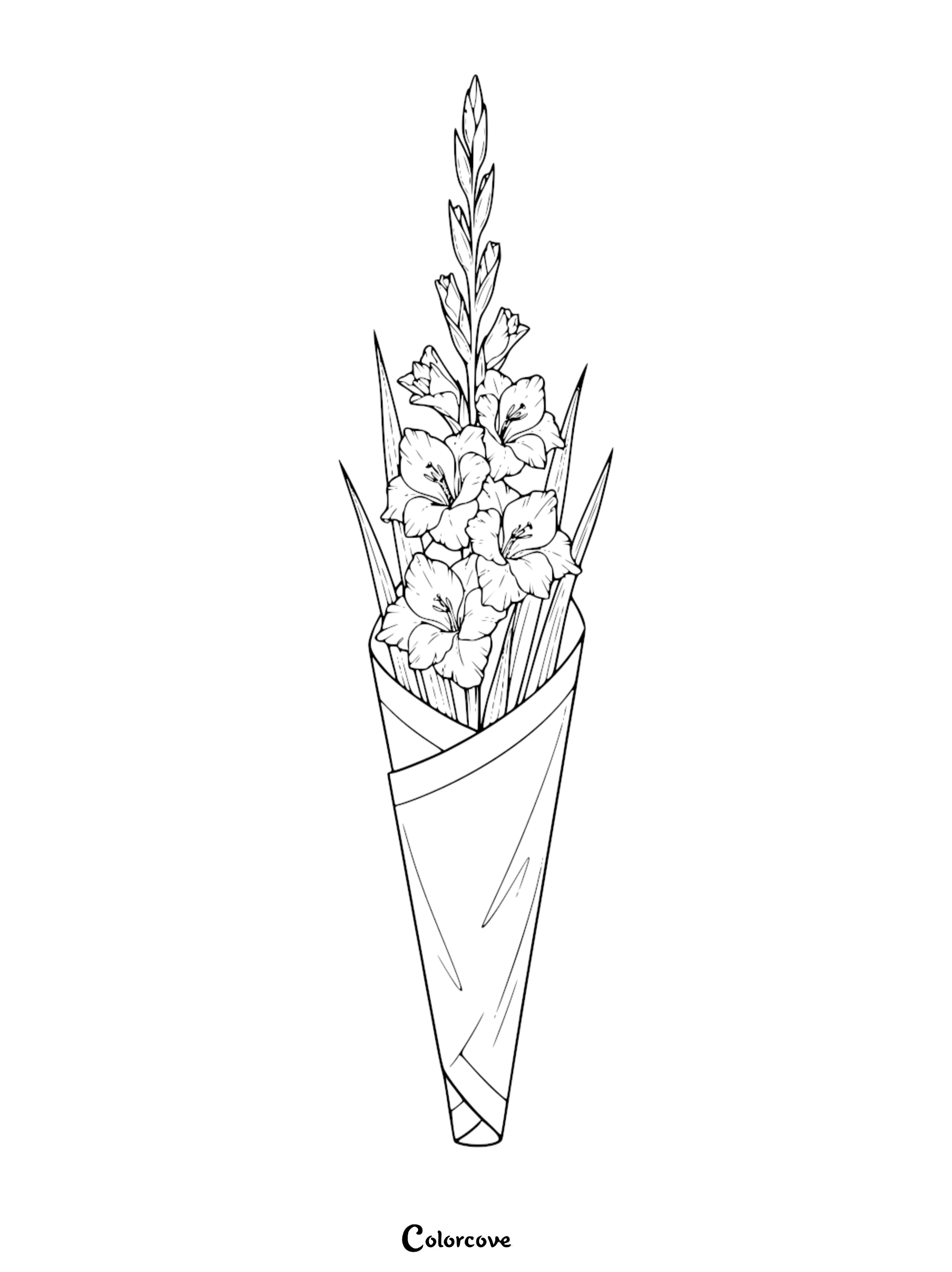
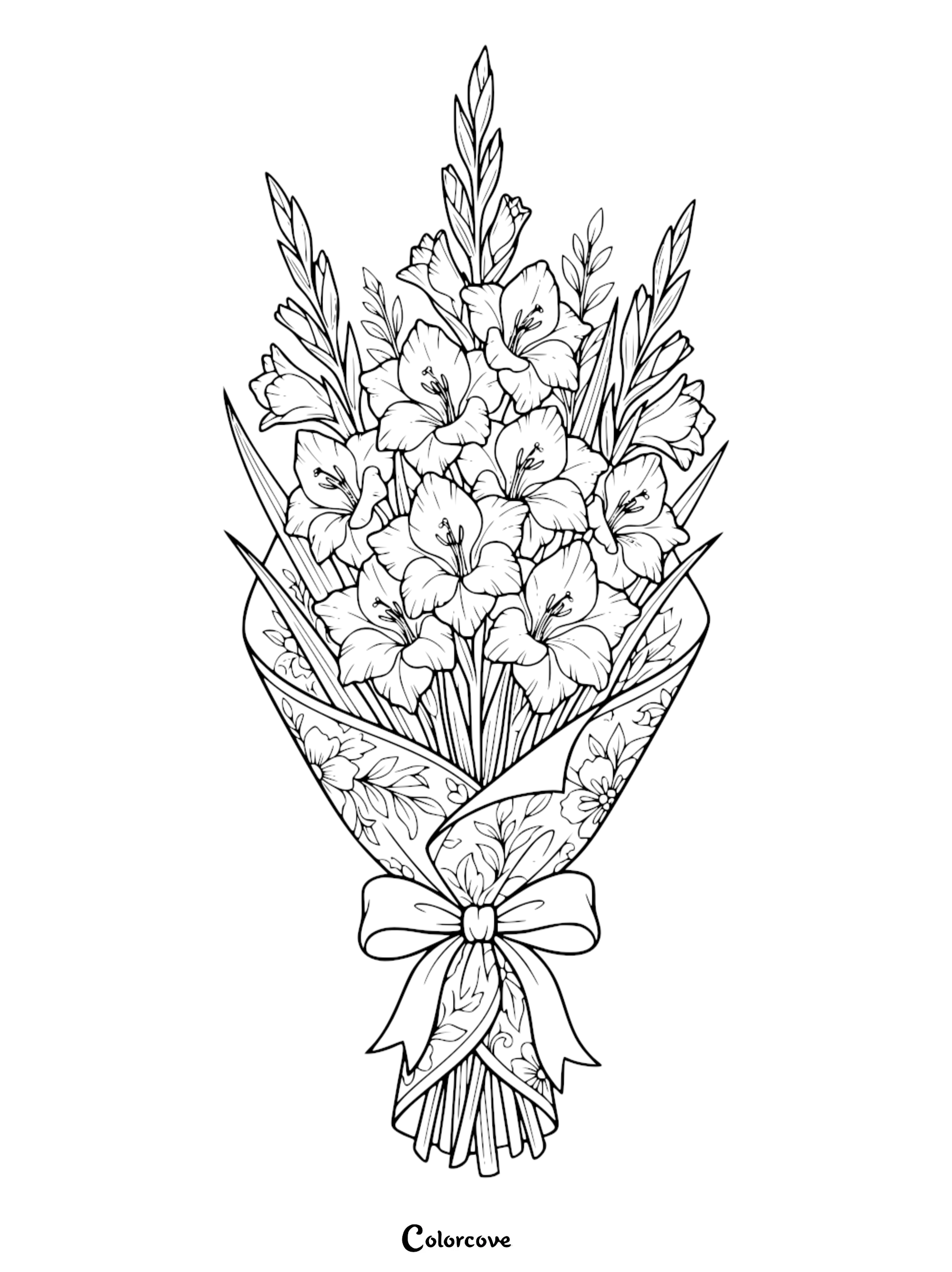
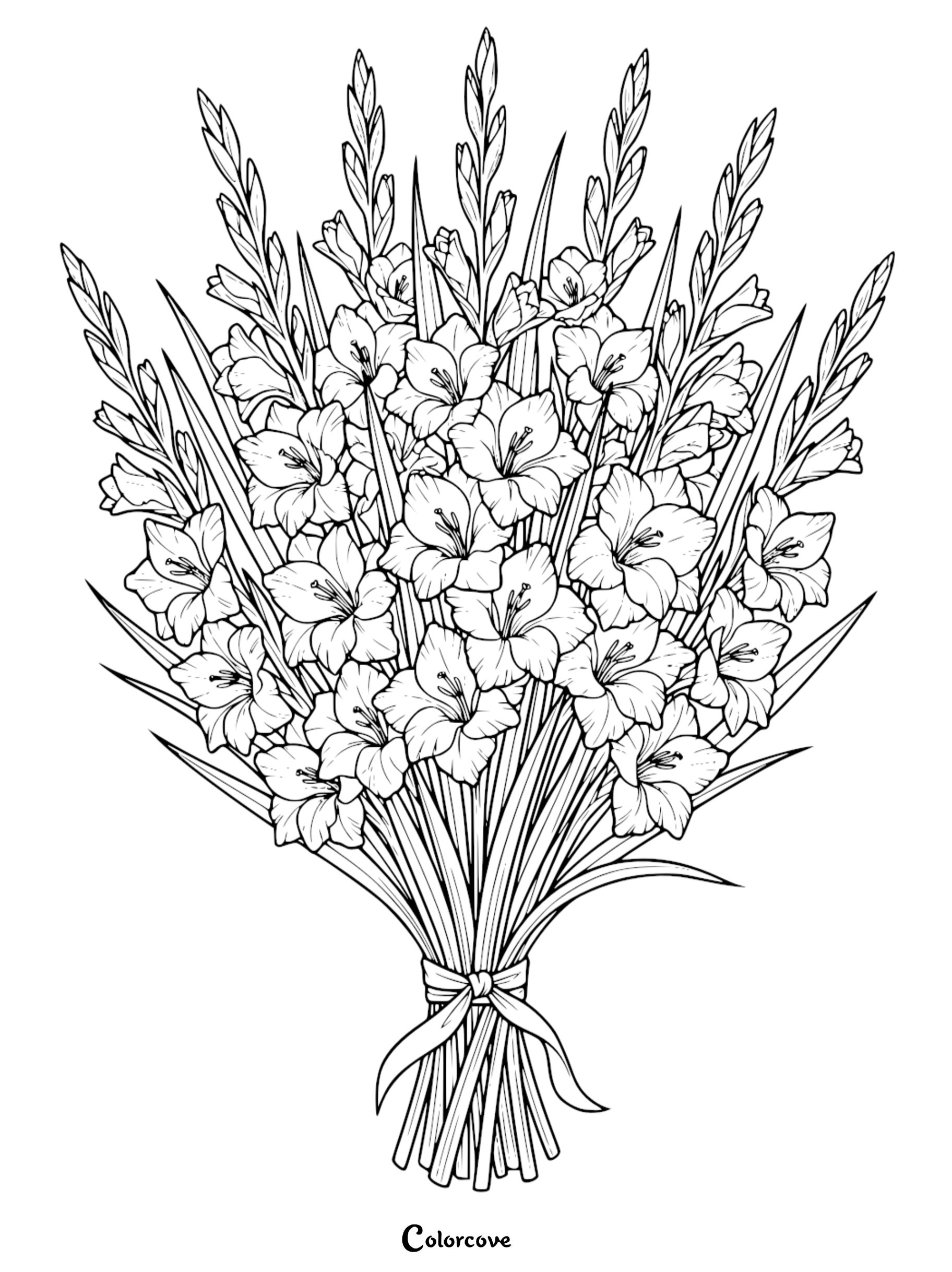
Fun Fact: The name “Gladiolus” comes from the Latin gladius, meaning sword — a reference to the plant’s long, pointed leaves which resemble the blade of a Roman soldier’s short sword. The gladiolus is the birth flower of August and a traditional symbol of strength of character, faithfulness, and moral integrity. South Africa is the world’s largest producer of gladiolus, home to more than 160 of the roughly 300 known species — the flower grows wild on the Cape Floral Kingdom’s famous fynbos. Learn more at Wikipedia.
Botanical Gladiolus Illustrations
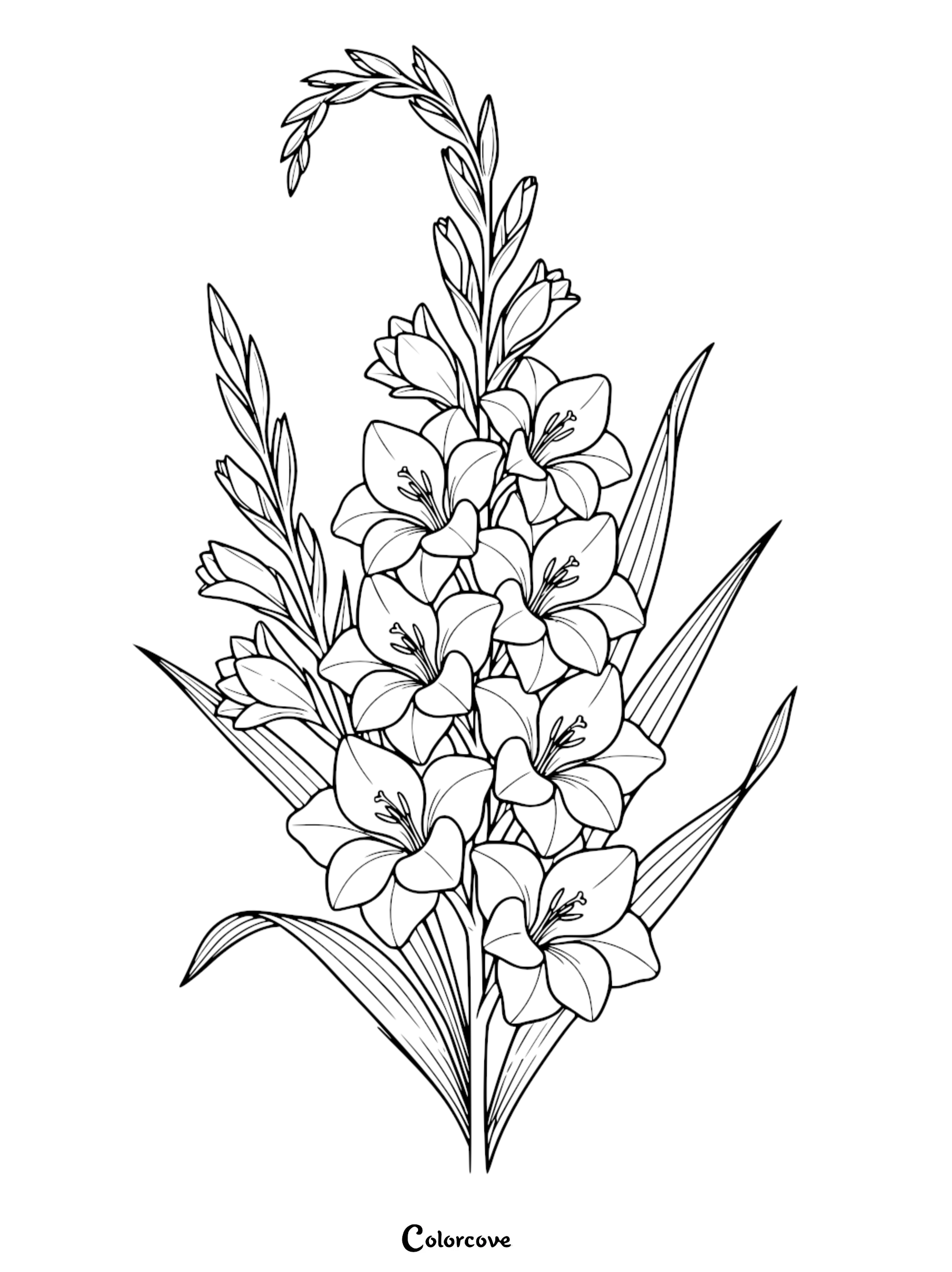
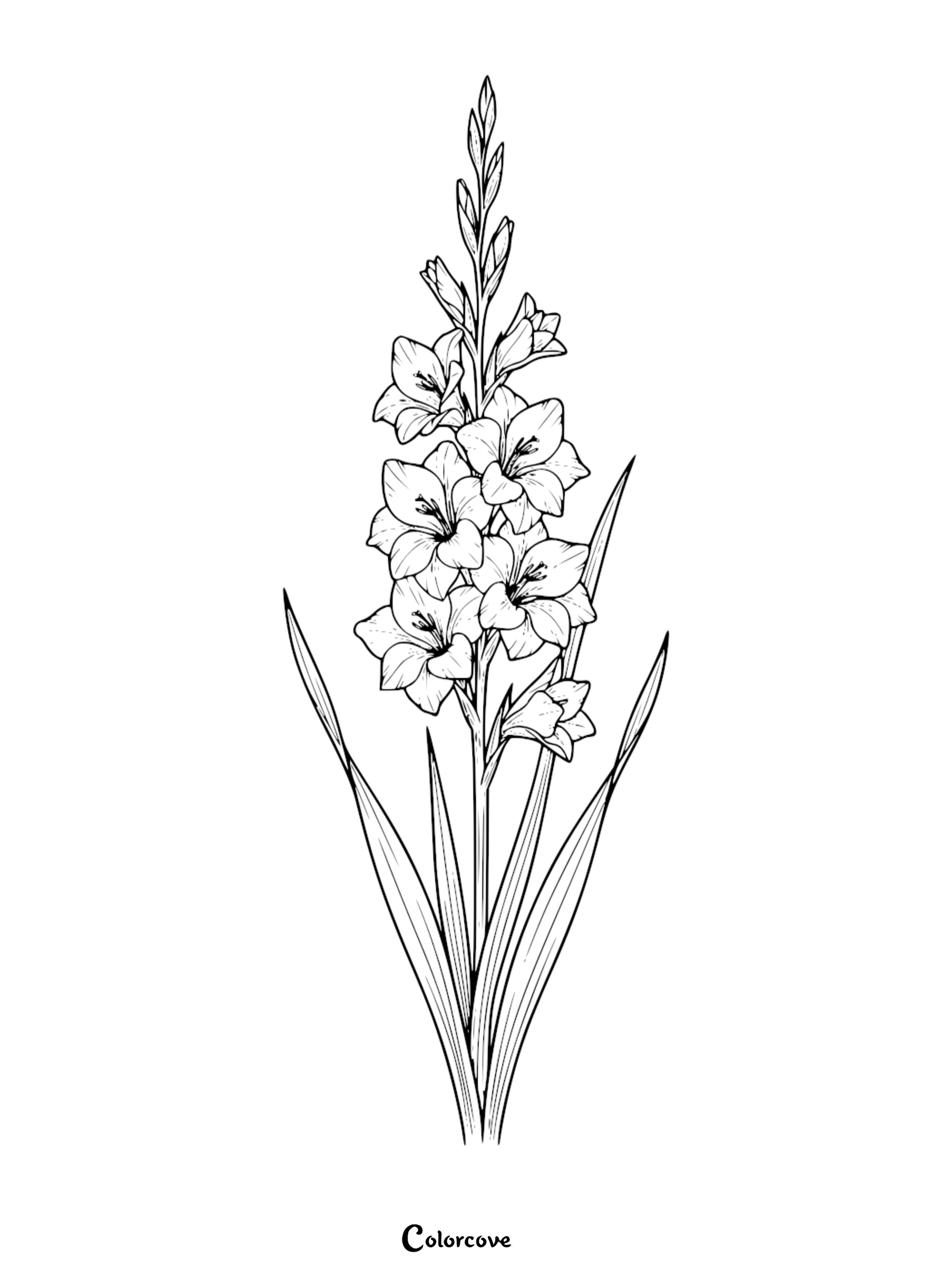
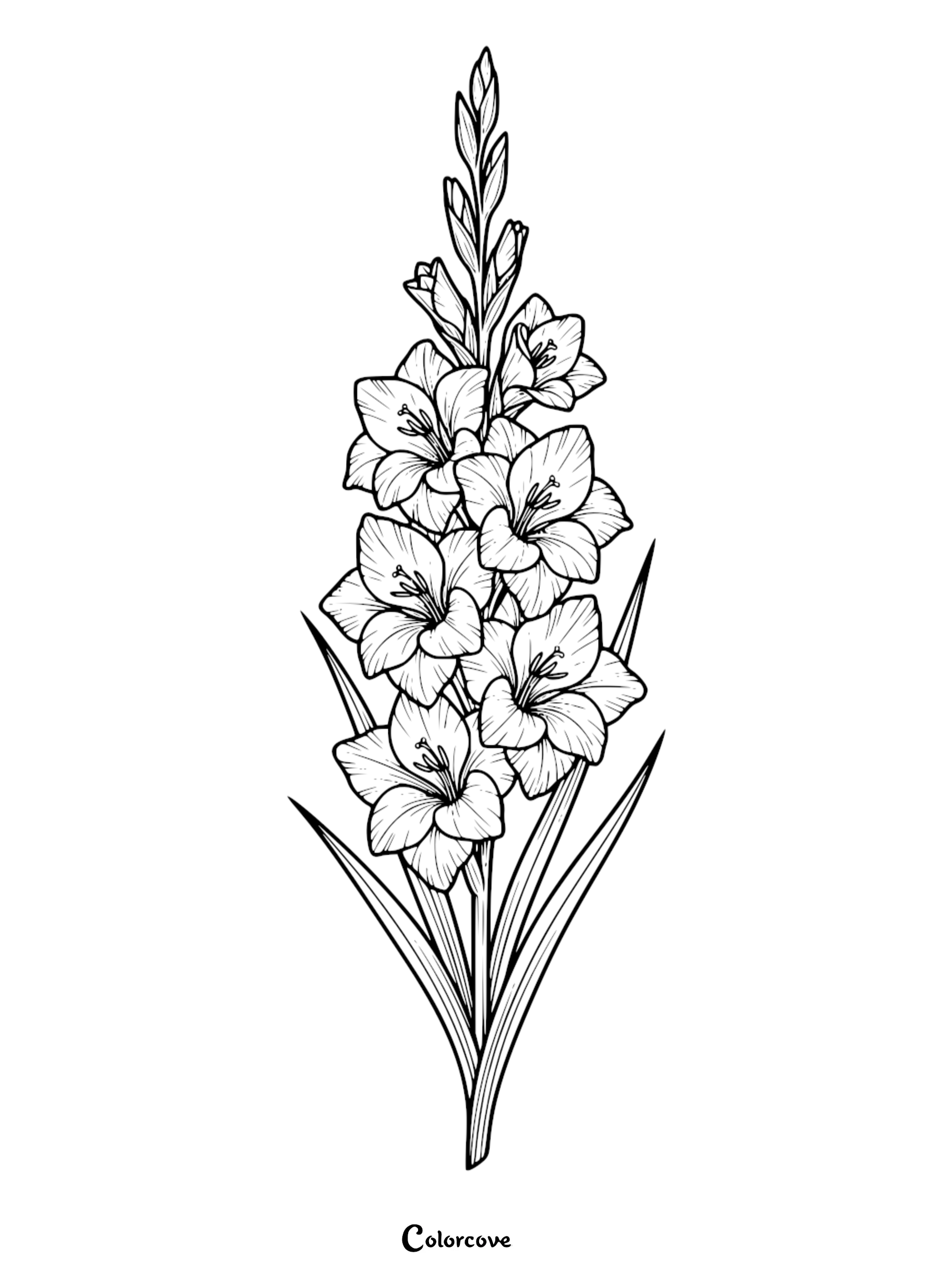
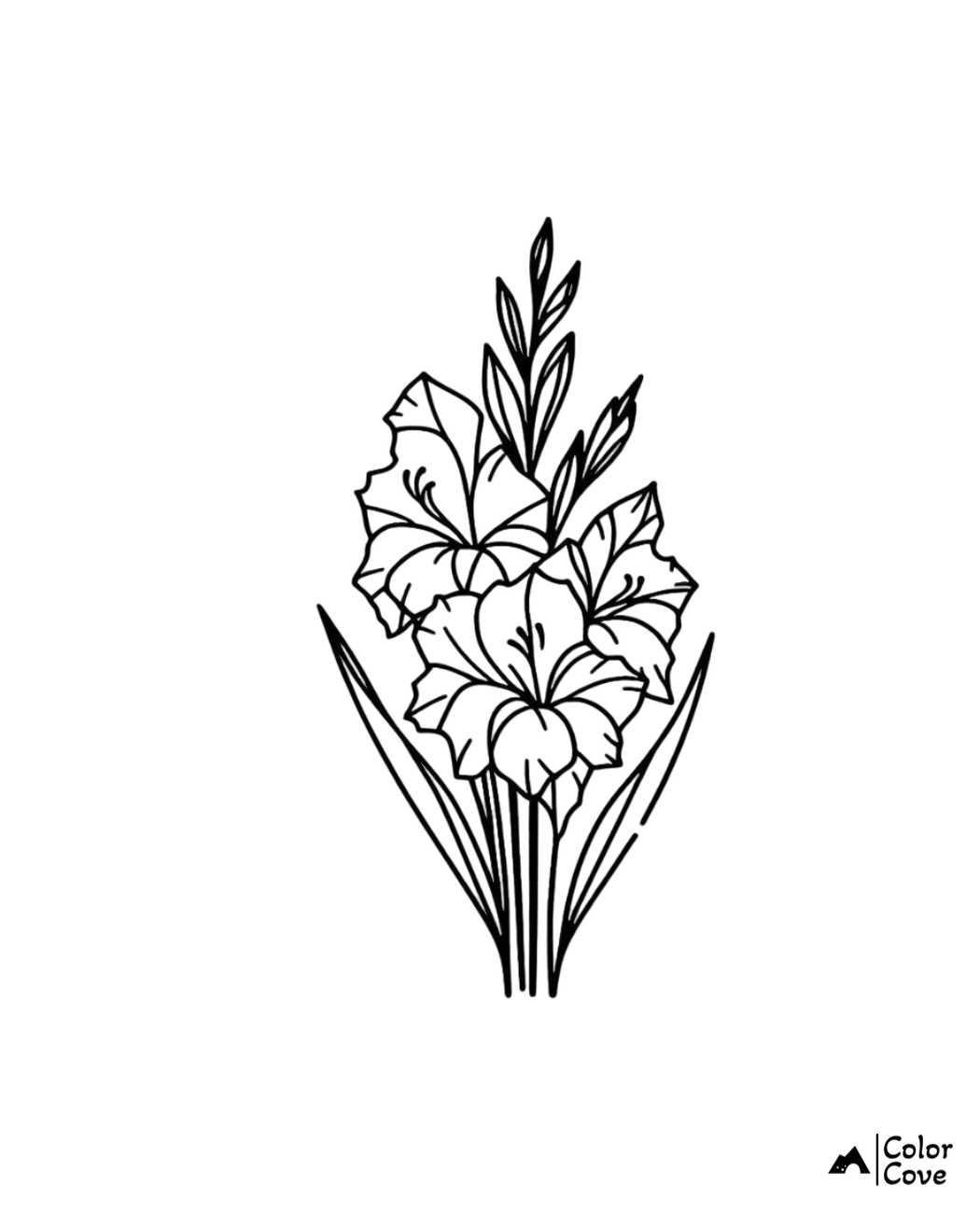
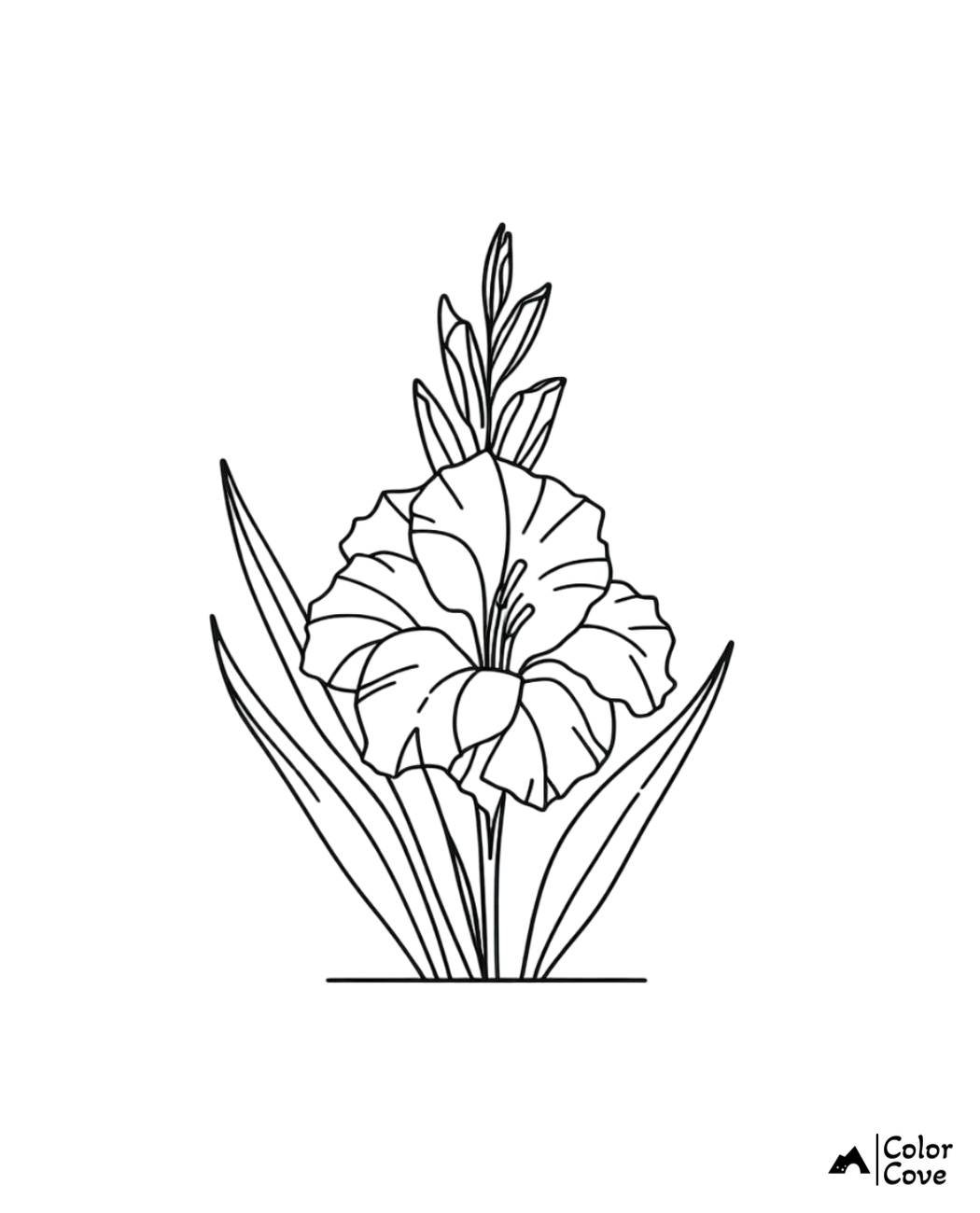
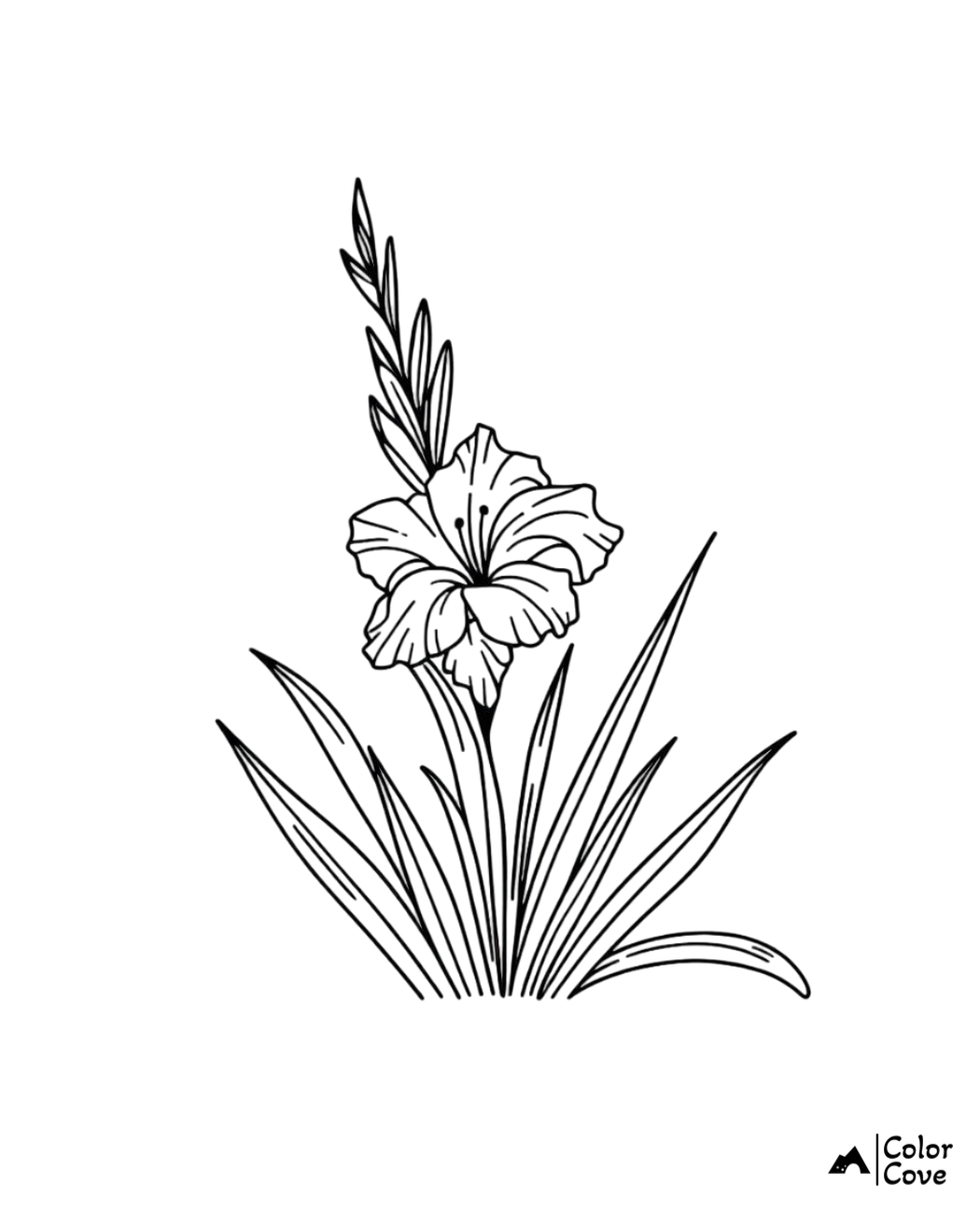
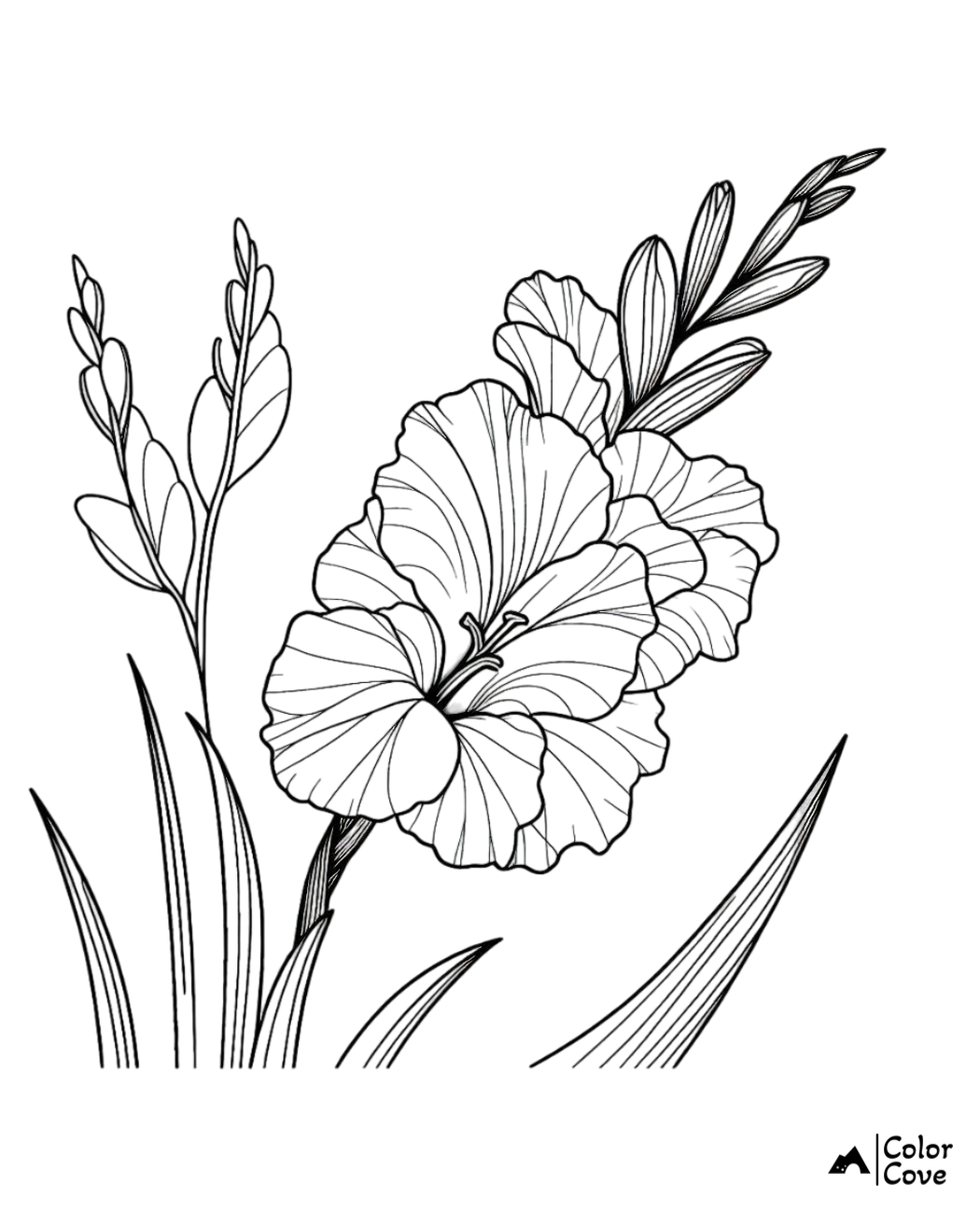
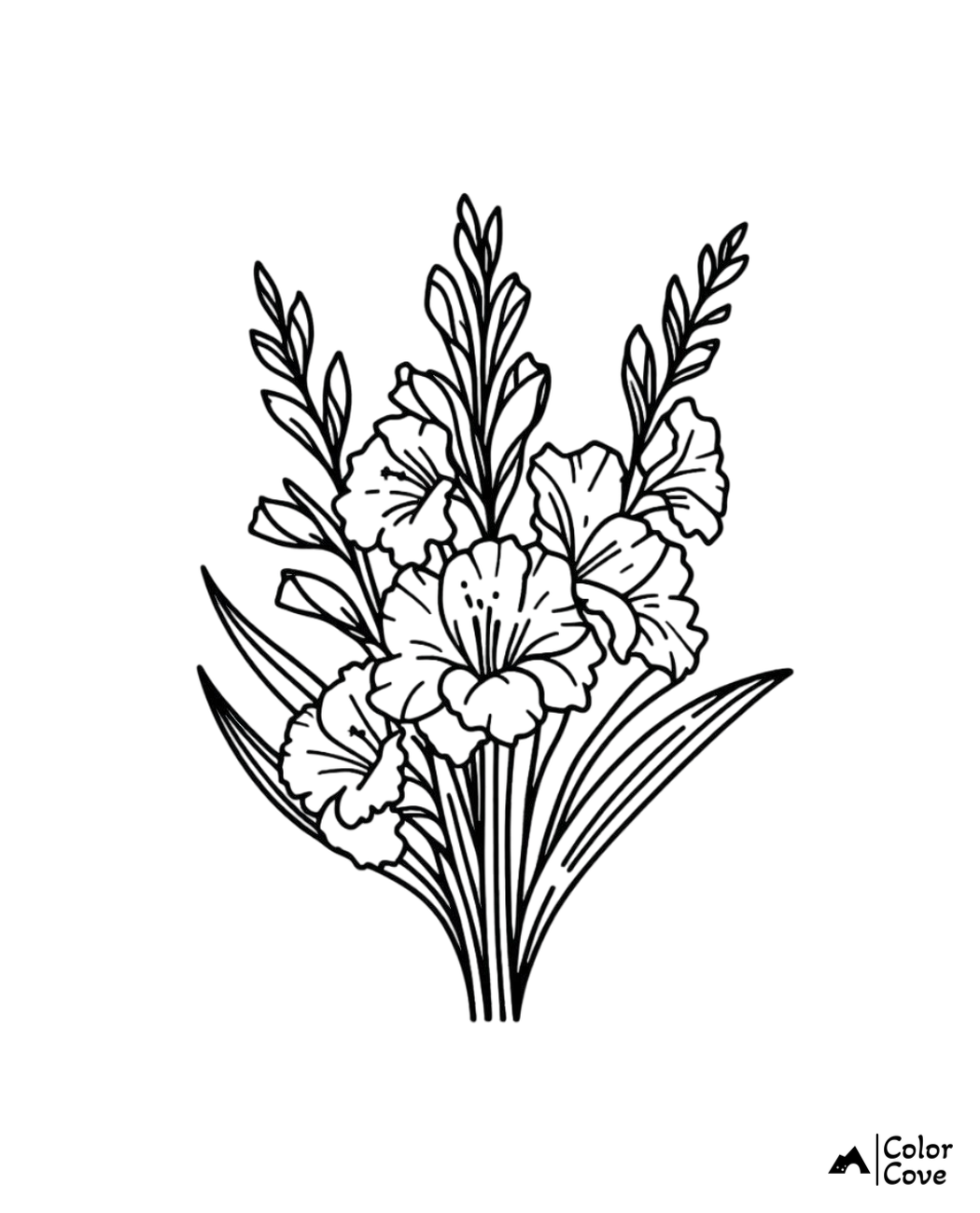
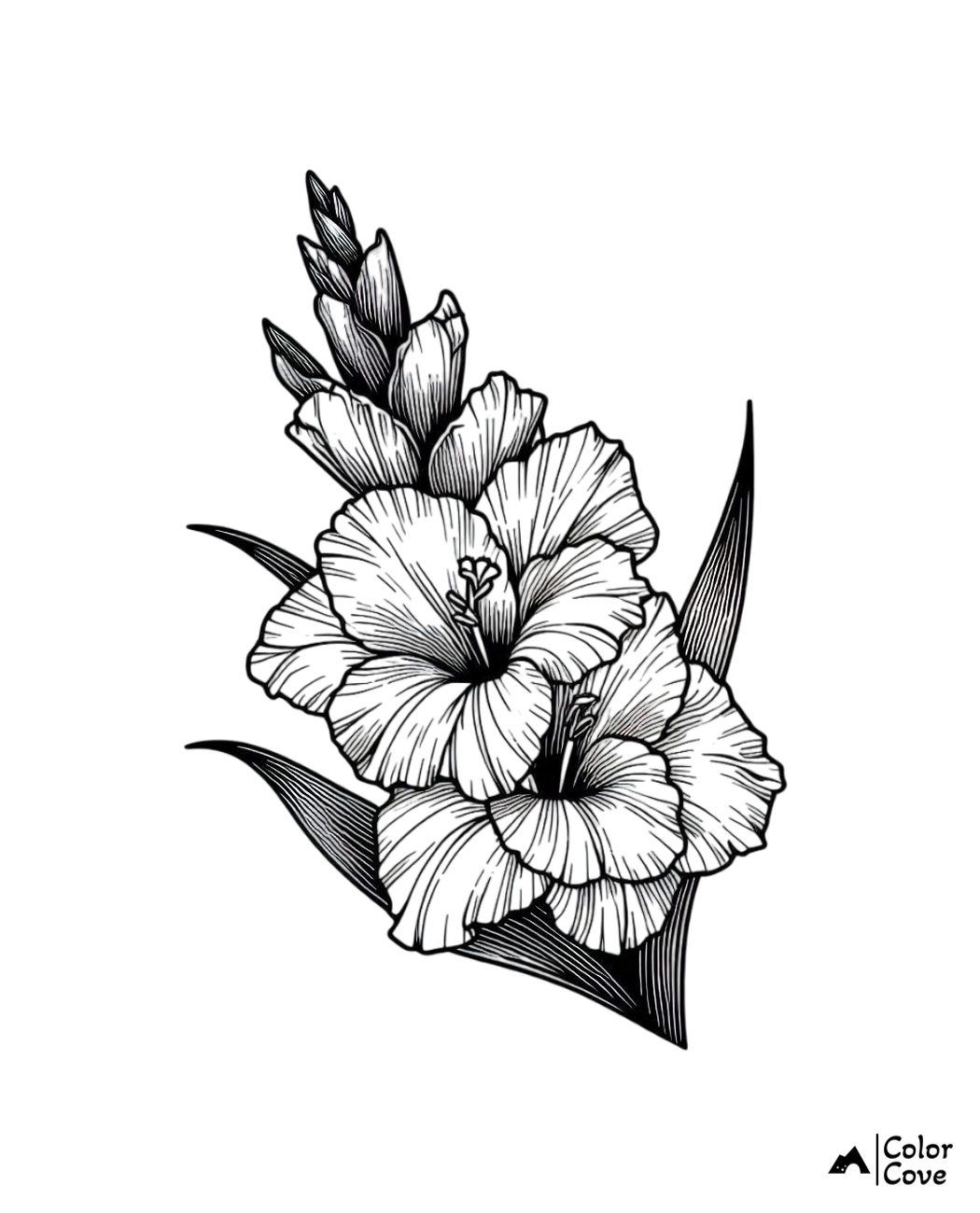
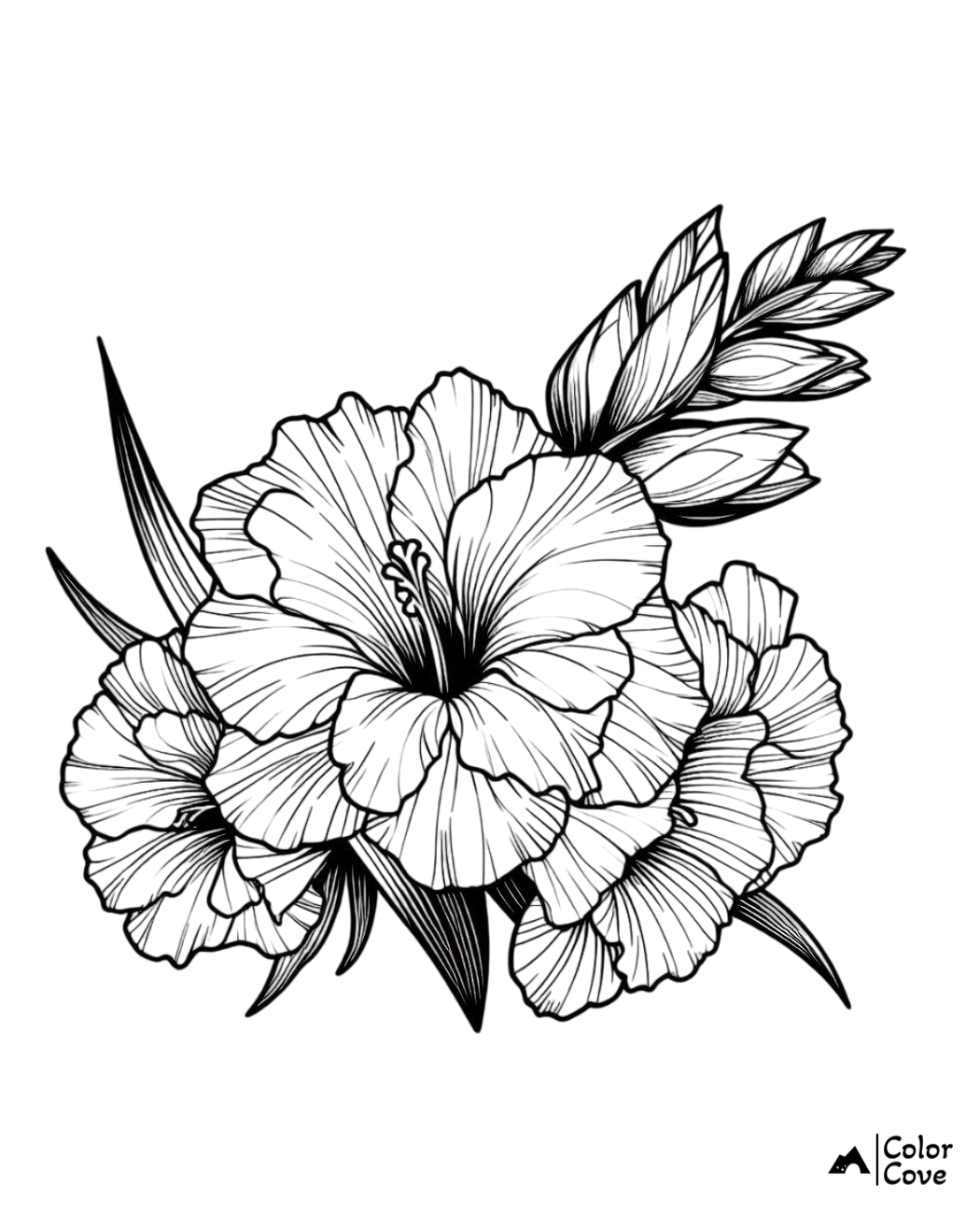
Eleven pages for careful botanical study — single gladiolus stems isolated against a clean background showing every detail of the sword-shaped leaves and staggered florets; multi-stalk groupings of two and three spikes; and close-up studies of a single fully open bloom. These are the most technically demanding pages in the collection. Watercolor pencils blended wet work beautifully here — the translucent pigment perfectly suits the delicate veining inside each petal.
Painting Watercolor Gladiolus Using Basic Shapes
Watch this technique-focused tutorial on painting gladiolus with watercolor by breaking the complex flower structure down into simple geometric shapes — great preparation before tackling the botanical illustration pages.

Gladiolus Coloring Tips & Craft Ideas
The gladiolus presents a uniquely satisfying coloring challenge: the florets open progressively from the bottom of the spike upward, which means a single stalk naturally shows buds, partially open flowers, and fully open blooms all at once. This gives you the chance to use a gradient across the whole spike — lightest at the tight top buds, most saturated at the wide-open lower florets — without it looking arbitrary.
- Petal Gradients: Start each petal with the lightest shade at the very tip and the edges, deepening toward the center throat where the petal meets the stem. This is the opposite of most flowers — gladiolus petals are typically paler at the rim and more intense at the base, which is what gives them their characteristic trumpet-like depth.
- Sword-Leaf Shading: The long, rigid leaves benefit from a strong central vein highlighted in a slightly lighter green, with darker shading pressed along both edges. This simple technique transforms flat leaf shapes into something three-dimensional without any blending.
- Butterfly Pages: Color the butterfly before the flower — the vibrant wing patterns will anchor your color scheme for the gladiolus bloom. Monarch orange against deep fuchsia gladiolus, or a blue morpho wing against pale salmon, creates instantly striking contrast.
- Botanical Print Display: Once completed, the clean botanical illustration pages look striking mounted in simple black frames and displayed as a set of three. Print on slightly heavier paper (90gsm or above) for a finish that frames well without buckling.
For the night-sky crescent moon page, try a resist technique — apply white wax crayon or a candle to the star and moon areas first, then wash a deep indigo or navy watercolor pencil blend across the entire background. The wax resists the pigment and the stars and moon emerge without any careful masking required.
Explore More Coloring Pages
 35 Orchid Coloring Pages: Printable Botanical Art
 29 Daisy Coloring Pages: Free Floral Printables
 29 Cute Honey Bee Coloring Pages: Free Printable Sheets
 56 Cute Bird Coloring Pages: Free Coloring Sheets
 52 Ginger Cat Coloring Pages: Free Printables
 43 Dragonfly Coloring Pages: Free Printable Sheets
 81 Cozy Butterfly Coloring Pages: Relaxing Nature Art
 36 Owl Coloring Pages: Print & Color Online for Free
 43 Cute Axolotl Coloring Pages: Free Printables
 39 Sunflower Coloring Pages: Golden Blossom Line Art
 57 Rose Coloring Pages: Intricate Floral Line Art
 35 Aster Coloring Pages: Free Printable Sheets
 25 Relaxing Hammock Coloring Pages: Free Printables
 43 Aquarium Coloring Pages: Free Coloring Sheets
 29 Cute Camel Coloring Pages: Free Printables


